KANAZAWA
Exploring Kanazawa’s Art Scene: From Tradition to Modern Masterpieces
ThrThroughout history, the people of Kanazawa City have embraced artwork, a trend that continues even today. Quieter than Tokyo, and with the added bonus of being much a smaller city, you can easily spend a day (or two) strolling from one artistic experience to another!
Modern Art in an Old Town
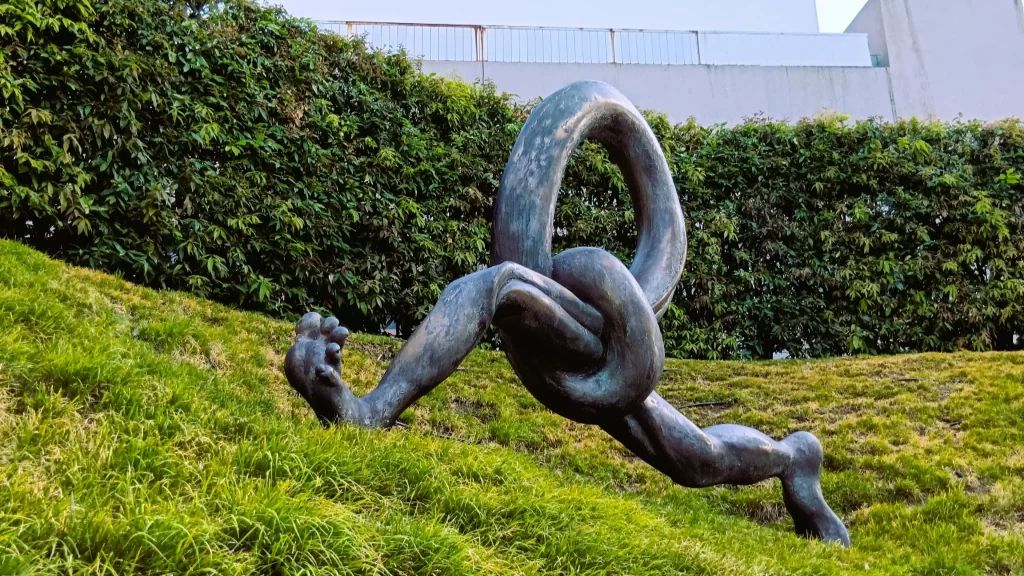
Kanazawa’s art is everywhere: some on proud display while others are tucked quietly away. Modern sculptures catch the eye and pique curiosity, like “Run!” which has been given a prominent perch on the corner of Kanazawa’s Kohrinbo intersection.
Wandering the labyrinth of narrow lanes that makes up Kanazawa’s downtown area, you’ll discover not just more sculptures, but also a scattered exhibition of telephonepole-mounted black and white photography by Daido Moriyama. His work captures lush lips in provocative moments, culminating in a bar called Kamu L, whose entire surface is plastered with bright red smackers from floor to wall to ceiling. Even the door, the bar, and the air conditioner have been smothered in crimson-painted lips.
Moriyama’s work is only one of several exhibitions by modern artists that are displayed by Kamu. Their main gallery, and the only place to buy your day pass admission ticket to all of their locations, is Kamu Kanazawa. On the avenue that runs between Kanazawa’s Kenrokuen Garden and the Kohrinbo intersection, Kamu Kanazawa has three galleries, one on each floor of the building. On the ground floor, you’ll find a mesmerizing installation by Leandro Elrich.
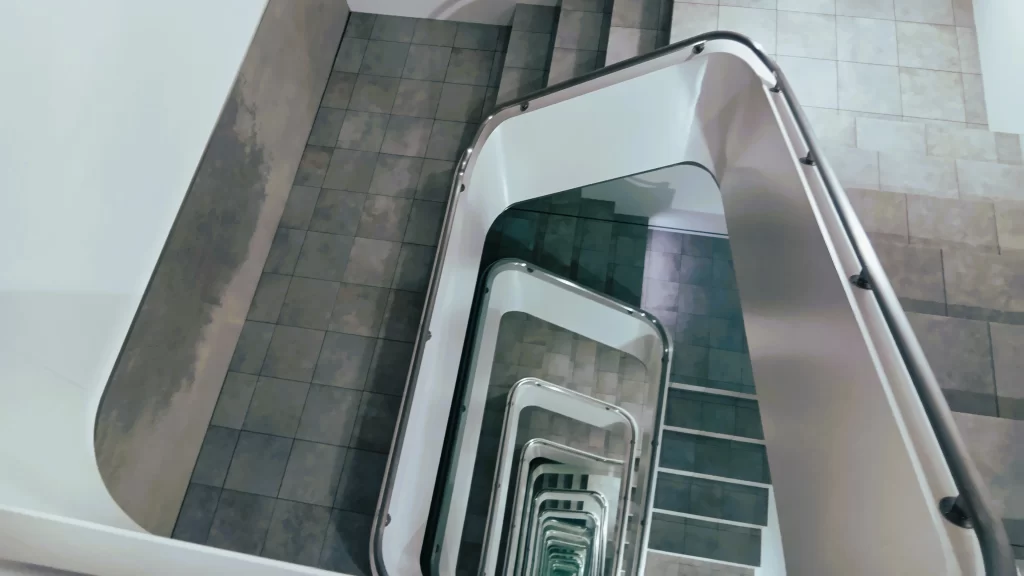
No, it’s not Escher-esque two-dimensional “trick art.” Elrich’s 3D work of concrete, metal, and mirrors fills an entire room and surrounds you with the illusion of infinity. Additional work by Elrich can be experienced at Kanazawa’s 21st Century Museum of Contemporary Art just a stone’s throw away. Nearly everyone who stops in Kanazawa pays a visit to Elrich’s Swimming Pool installation, getting a kick out of watching fully clothed people milling around in the deep end.
Traditional Works by Local Artisans
Modern works are all well and good, but Kanazawa is indisputably one of the most traditional towns in Japan, which means it is virtually impossible to escape its centuries-long history of functional art. Everywhere you turn, you’ll find art. It’s in the embroidered kimono on display in a shop window; it’s in the gold and mother-of-pearl inlaid on your lacquered dessert plate; it’s in the richly painted tea cup that arrives with your lunch order…
Yes, you say, but what about “art” art? The things you can hang on your wall? It’s just not the same displaying a soup bowl, no matter how pretty it is.
This is true. However, traditional paintings and sculptures are rare outside of Tokyo or Kyoto. The reason for this is quite simple: for centuries, feudal lords from all over the country were commanded to relocate their entire households every other year, dividing their time between their own domains and Edo (i.e., Tokyo). If you’ve ever moved before, you know just what an enormous pain it is to pack up, haul, and then unpack your stuff after you arrive. (And oftentimes, delicate things are damaged in transit.) The same was true for samurai, who may have been wealthy, but also resisted ownership of inconveniently non-functional possessions. Thus, art had to be incorporated into personal items, clothing, and dishes.
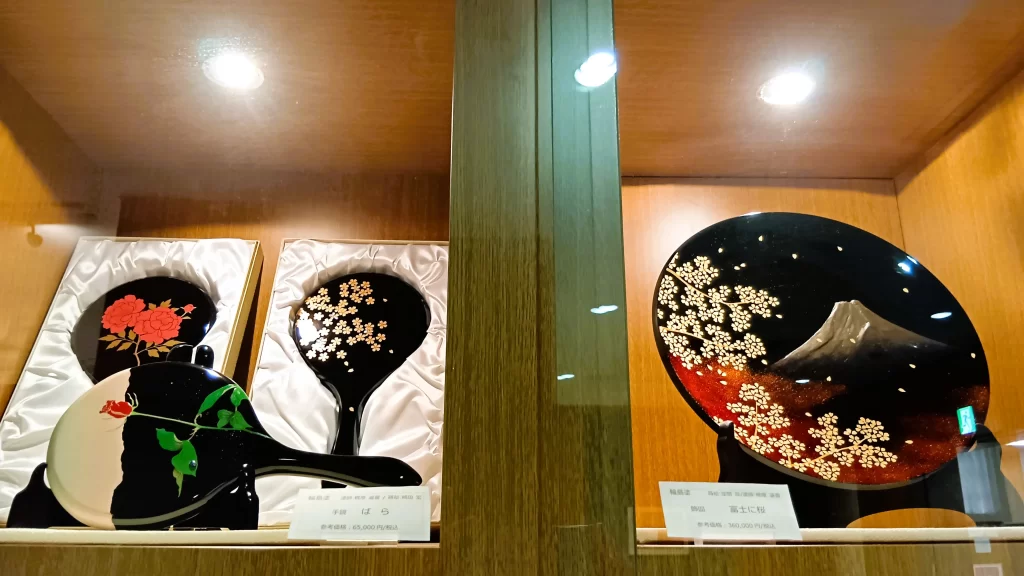
The best place to see examples of all the skillfully decorated wares that the Kanazawa area is nationally known for is at the Ishikawa Prefectural Museum of Traditional Arts and Crafts. This is your “one-stop shop” for all the beautiful things that brought art into the daily lives of generations of samurai families. With exhibits in both English and Japanese on three dozen different crafts, you’re sure to find something that speaks to you. Most of the items on display are for sale and there’s also the museum gift shop to browse through.
Need something a little smaller? Gift and novelty store, Kanazawa Crafts Hirosaka, which is right next to the Kanazawa Noh Museum, sells a nice range of personal novelty items. All of their stock is drawn from local craftsmakers and are arranged alongside explanatory placards.
Art & Food
Exploring a city’s art scene can make a person hungry. Luckily, there’s more than one gallery in Kanazawa that offers food as well as art. Gallery Kanazawa Pause encompasses the dining area of a wonderful noodle restaurant called PickPHO, which combines the spirit of Thai food with local ingredients.
Just down the street from PickPHO is second-floor cafe Musée. Order a cup of coffee (or try one of Japan’s most flavorful examples of coffee-flavored jell-o) and peruse the gallery space. With its white plaster walls and dark, exposed wooden beams, you’ll feel like you’re stepping right into artwork that has been matted and framed.
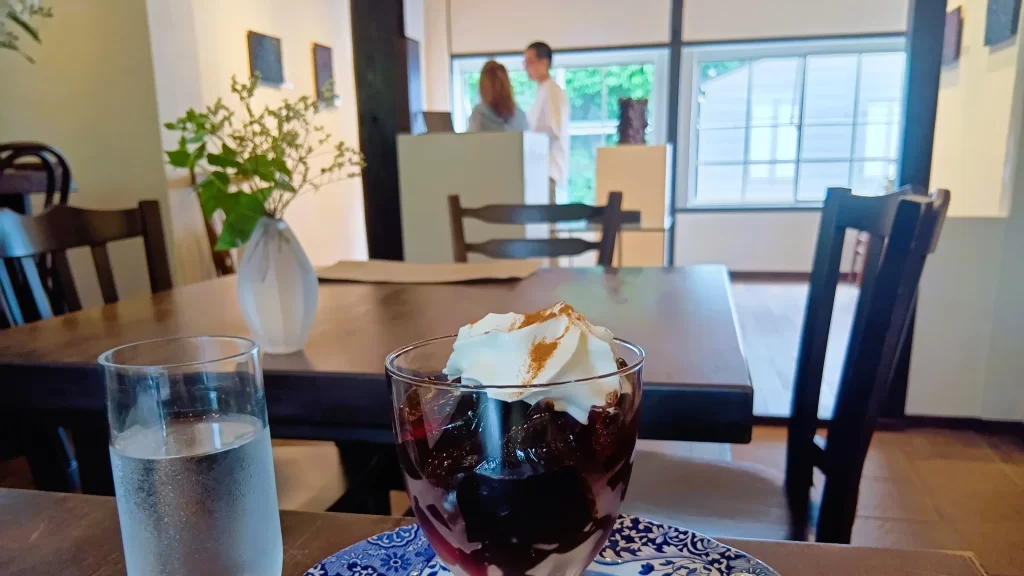
Art exhibits at Musée only last for about a week, so if you happen to be staying in town over the weekend, why not visit a second time?
Kamu, PickPHO, and Musée aren’t the only places in town with private galleries. There’s also Gallery Ponte and Gallery Tonellico, to name a few, both of which show works by individual artists, some local and some not.
But for the most up-to-date art news, check out Musée’s stairwell bulletin board and the table beside the cafe restrooms. While you’re at the Ishikawa Prefectural Museum of Traditional Arts and Crafts, don’t forget to look through their brochure racks near the museum gift shop. Although stopping by the Tourist Information Center isn’t a bad idea, you’ll probably be able to dig a bit deeper into the art scene by simply keeping your eyes open in other art spaces.
About Keri Yazawa
Keri Yazawa, a resident of Kanazawa City since 2005, guides bicycle tours specializing in good food, quirky history, local craft making, and gorgeous landscapes.
Article photos and written content © 2025 Keri Yazawa. All rights reserved.