KANAZAWA
Hakusan Cycling: Pedaling Through Mountains and Centuries of History Part 2
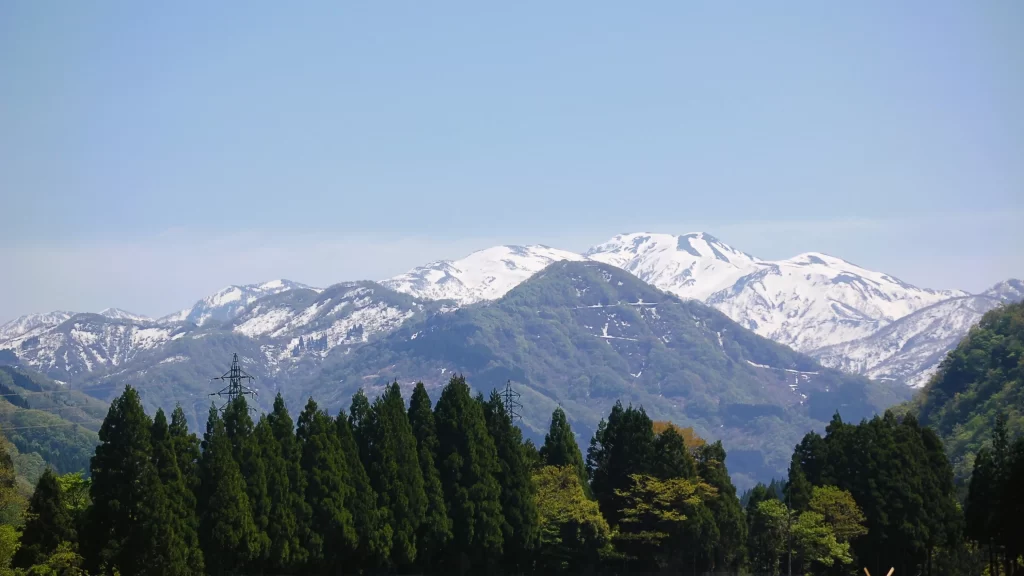
Greetings from Mount Hakusan! Considered one of Japan’s three most sacred mountains, its name translates to White Mountain, a moniker it earns every year as it gleams with snow from October to June. It is the crown jewel of the Hakusan Tedorigawa UNESCO Global Geopark, but the geological wonders and delightful folklore of the mountain’s foothills are equally fun to explore, especially if you prefer cycling over hiking.
There are several fantastic must-see spots along the Tedori River, from the gorge to the waterfall to the site of the final battle where nearly 100 years of self-rule came to a bloody end in 1574 (the view from the top of the hill is amazing), you can easily fill your cycling itinerary for the day. As spectacular as those are, there are several smaller, sometimes mysterious and sometimes miraculous points of interest that are worth a visit.
A Married Couple Set in Stone
First up is Meoto-Iwa. You wouldn’t think that there could be anything special about a pair of large rocks weathering the centuries together, side by side, but the Japanese see a kind of harmony here that prompts the name “Married Couple Rocks” or Meoto-Iwa.
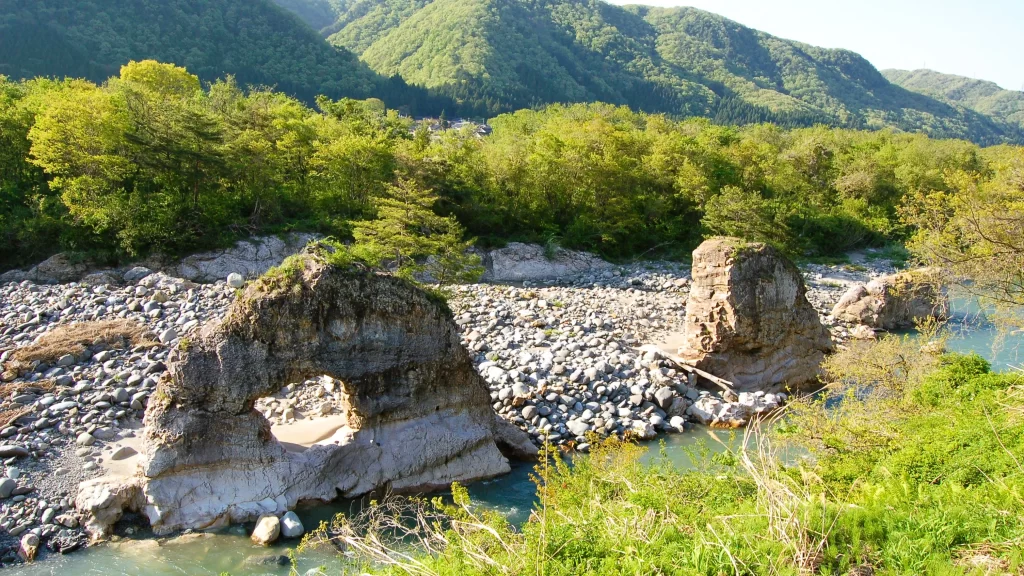
The pair that make their forever home in the Tedori River were not carried here during floods, unlike other large rocks. Their presence is a mystery because they have always been here, side by side. While the surrounding material was eventually broken up and swept away by the current, this pair stands the test of time.
Around and Around We Go
Next, let’s take a moment to recognize the humble pothole. (No, not the ones on the road – the ones in the river!)
Water erodes rock. We all know this from our school days. In the mint-colored forth of the churning Tedori River, boulders with strange circular holes can be seen. One in particular located near the Kawai Shimono Enchi Park even looks like a face with a pair of eyes poking up out of the water!
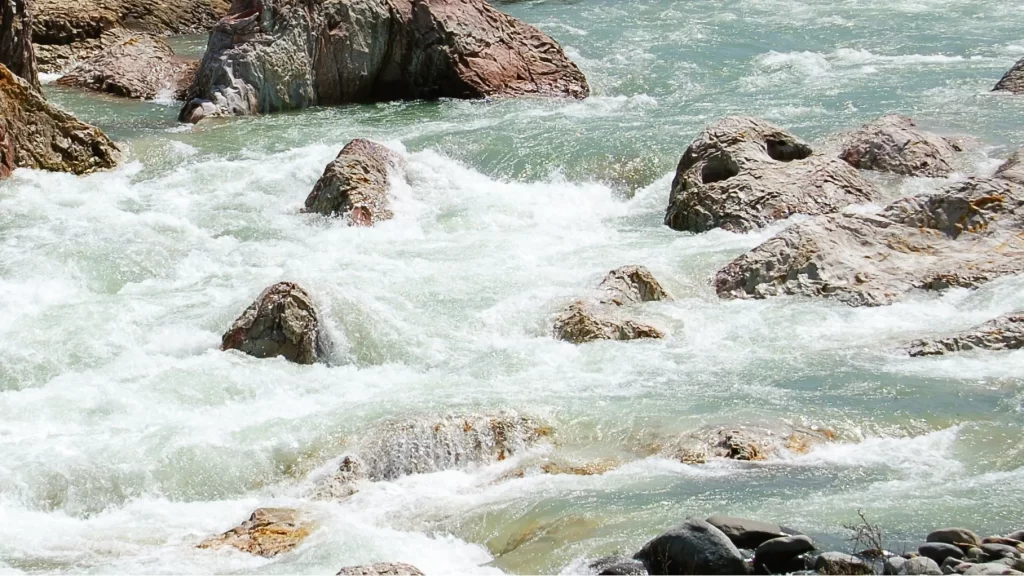
How in the world did that come to be? Well, it’s the fault of tiny pebbles that get washed into and trapped inside slight depressions on the boulders. With every rainfall, the rising water swirls the pebbles around, drilling out the material from the boulder until – voilà! – we get a hole, a geological pothole. (I’ve always wondered why we call holes in the pavement “potholes” but I can see the logic now.)
The Monk Who Made a Well
What’s an adventure through the countryside without a little folklore? So sit back and let me tell you the story of Koubou-ike, or Koubou’s Pond.
Once upon a time, a traveling Buddhist monk named Koubou arrived at a small village beside the Tedori River. (In those days, a lot of priests left their comfortable life of study and reflection in Kyoto to roam the countryside providing guidance and religious services to the farmers and craftsmen.) The people who lived near the Tedori River could hear the roar of the current below in the gorge day and night, but fresh water was hard to come by because it was so dangerous to brave the slippery, steep gorge walls to fetch it. Attempts to build a contraption with which to draw water were constantly broken by unpredictable storms and washed away by flash floods.
A kind, elderly woman who helped Koubou described her struggle to supply her home with water every day and the monk picked up his walking stick and BAM! He rammed the end of it into the ground. From that spot, a perfectly round, stone well opened up and the water rose and rose and rose until it was high above the river below and the people could easily reach it.
This miracle is commemorated with a statue at the site of the well, which is still there and, although locals don’t dip buckets into the water, they do fill empty jugs at the provided tap next to it.
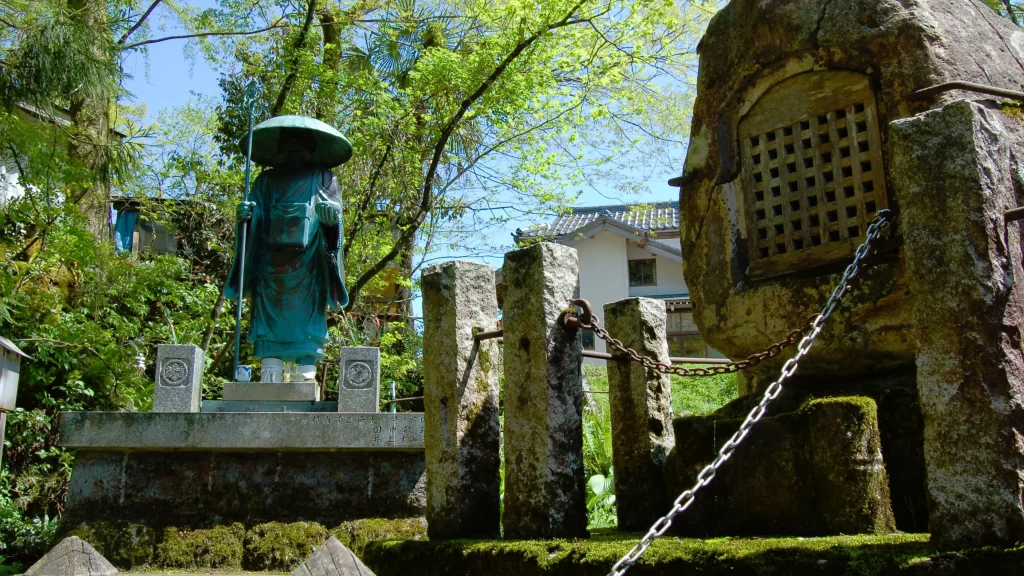
Is the story true? Yeah… no. What actually happened was this: as the volatile water in the river swirled small pebbles trapped in a rocky depression around and around, eventually turning a run-of-the-mill pothole into a solid stone well. The well was revealed when the water level of the river cut a deeper path through the gorge and its water level fell. Today, geologic forces exert pressure that pushes the ground water up far above the level of the river, which makes it a natural wonder you’re unlikely to encounter again. In a country that has natural water springs around every corner, this one makes the nation’s top 100… but yes, you should probably still boil the water before you drink it.
The Tree That Shouldn’t Be
Right, enough about rocks. Let’s talk about… trees! Well, one very impressive tree. Across the gorge from Koubou’s Pond is a massive, 700-year-old cedar called Oboke-sugi. Or, the Heaping Bowl of Rice Cedar. (If you tilt your head and squint, um…yeah, see it?)
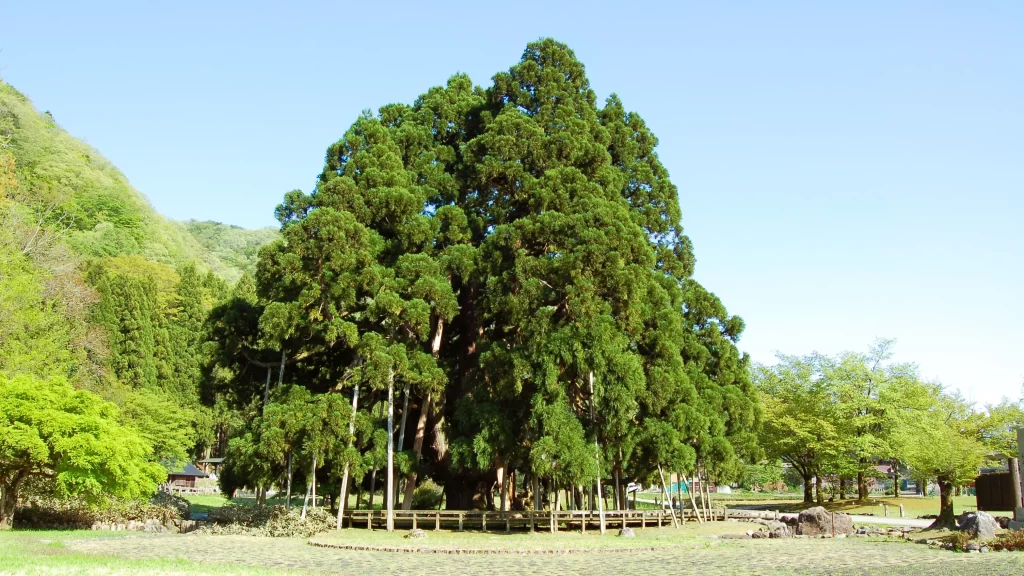
Another Top 100 natural treasure, this tree’s origin is a local legend to rival the miracle of Koubou’s stone well. The story begins with a Buddhist priest by the name of Daichi returning from Kyoto to his hometown to found a temple. Perhaps he was met with skepticism, because this priest took hold of a stick of cedarwood that he’d brought with him on his journey and THUD! He rammed it into the ground, saying, “If this grows and flourishes, so too will Buddhism here.”
The people were amazed when, against all odds, the seemingly dead stick did indeed grow and grow and grow. Faced with this miracle, the people became devout followers of Buddhism. Still to this day, many people visit the Oboke Cedar to experience the wonders of nature, time, and the power of the gods.
Did That Dragon Just Wink at Me?
We all know the saying: “Everything is full of gods.” Deep in the Hakusan Geopark, far away from the sounds of traffic and the hum of city life, I can believe it, especially when I see the Japanese kanji character for “dragon” painted on the sides of old rice storehouses.
For the Japanese, dragons aren’t creatures of greed, destruction, and fire. They are the gods of water. So, you’d want a dragon on your side if you were worried about fire and, in a time when rice – not coins – was used as actual money, you’d be in serious trouble if your annual rice harvest went up in flames inside your community storehouse.
Those times are centuries past now. (Sorry, but you won’t be able to pay for your 7-11 egg salad sandwich by dumping a handful of rice on the counter.) Still, remnants of the tradition remain in the form of the old rice storehouses. There’s one across from the former Hakusan-shita Train Station that doesn’t just have a kanji character tucked under the eaves – there’s an actual wooden carving with gleaming metal eyes and a single metal ball (perhaps representing the storehouse’s precious contents) clutched in its grasp.
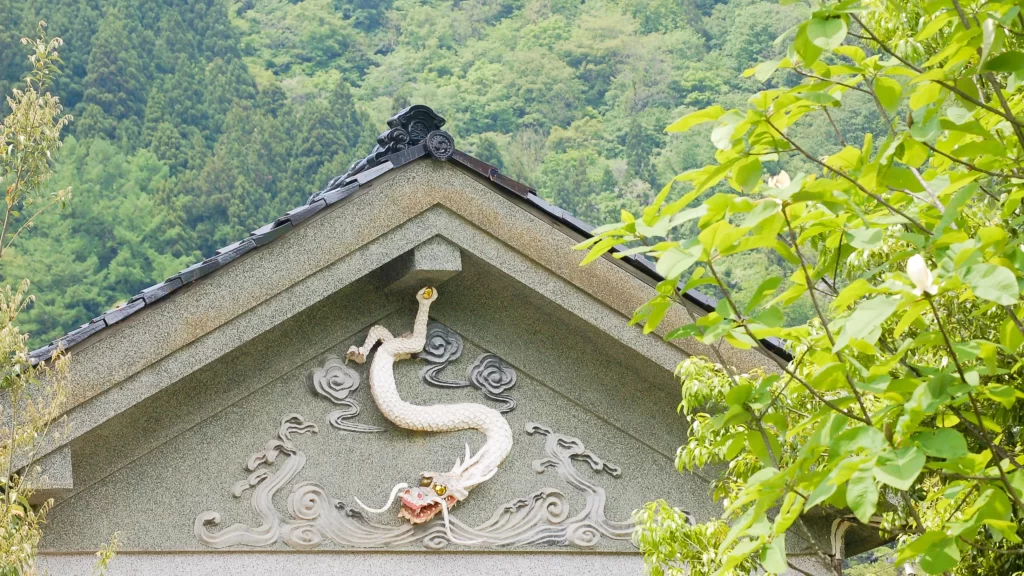
The strange snake-like shape of the dragon is an ultra-simplified version of the Japanese kanji for water: 水
The Best View Around
Water, trees, rocks, mountains, and valleys. It may not sound terribly exciting, but this geopark offers a fantastic and refreshing bicycle ride. Mount Hakusan is a lovely sight, so lovely that it’s easy to forget the other amazing view. This one isn’t of snow-covered peaks; it’s of the land that was scrubbed flat by both thousands of years of flooding and the relentless wandering of the Tedori River whose course shifted drastically from flowing north to flowing west.
The resulting plain is called an alluvial fan and it’s best seen from the top of Shishiku Mountain.
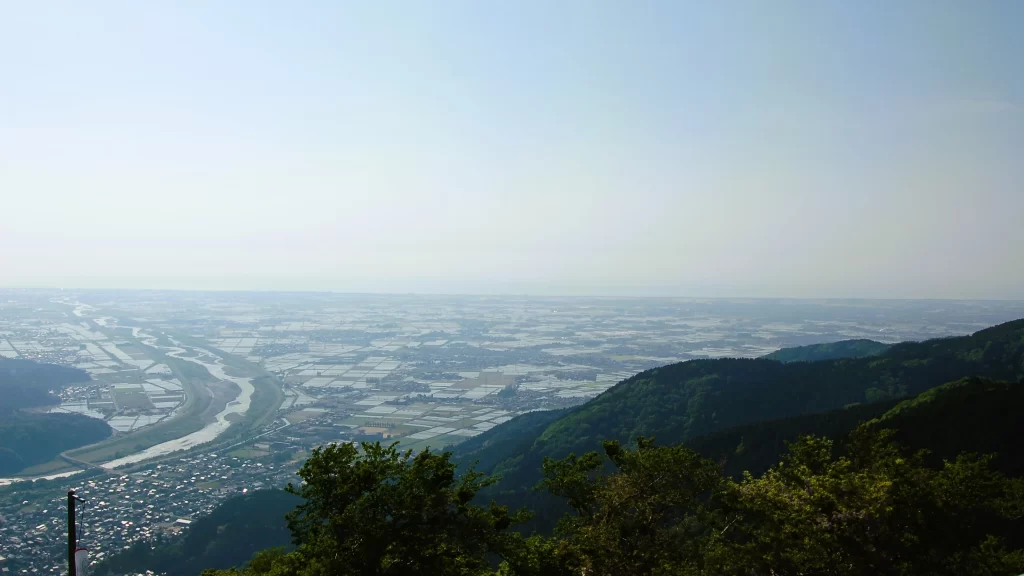
Before you turn in your rental bicycle, treat yourself to a ride in an enclosed gondola of Sky Shishiku. For a very reasonable price, you can cruise up the ropeway on a roundtrip ticket. The view, as you can see, is worth it.
About Keri Yazawa
Keri Yazawa, a resident of Kanazawa City since 2005, guides bicycle tours specializing in good food, quirky history, local craft making, and gorgeous landscapes.

©Keri Yazawa