NAGANO
Nakasendo & Historic Towns of the Kiso Valley: Experience the Seasonal Beauty of Japan’s Middle Mountain Road
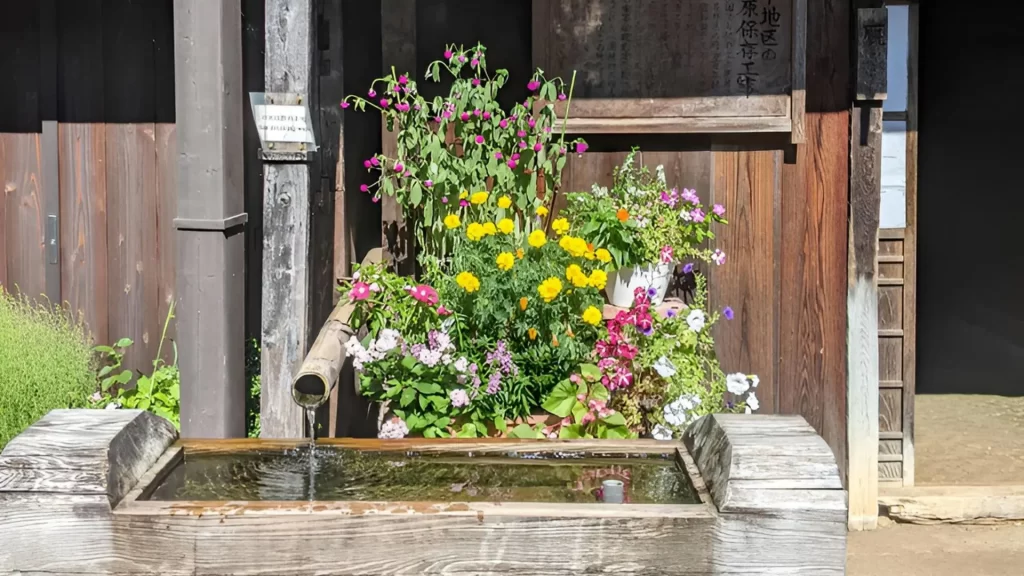
©Peter Carnell
Through the celebrated Edo Period (1603-1868), the ruling Tokugawa Shogunate implemented measures to control the movement of the Japanese people. One such measure was the creation of official highways to facilitate the easier movement of people and goods, while also allowing the shogun to dictate who could travel. Five roads known collectively as the “Gokaido” spanned out from the capital of Edo – now called Tokyo – of which, two were the most significant.
The “Tokaido” or “Eastern Sea Road” was the more direct of the two routes, running along the Pacific Coast from Edo to Kyoto. Alternatively, the “Nakasendo” or “Middle Mountain Road” was the more challenging yet scenic route that connected Edo and Kyoto via the mountainous heartland of the country. Along the route, sixty-nine “shukubamachi” or “post towns” provided services including accommodation, food and supplies to those on the road.
Many of the post towns accumulated great wealth as they provided essential services to travelers, most notably, “daimyo” (feudal lords) obliged to travel to the capital with their full court, for an audience with the Shogun every two years. Today, much of the route lies beneath sealed roads and the former post towns have been ungraciously developed. But thankfully, not all…
©Peter Carnell
Hiking the Nakasendo in the Kiso Valley
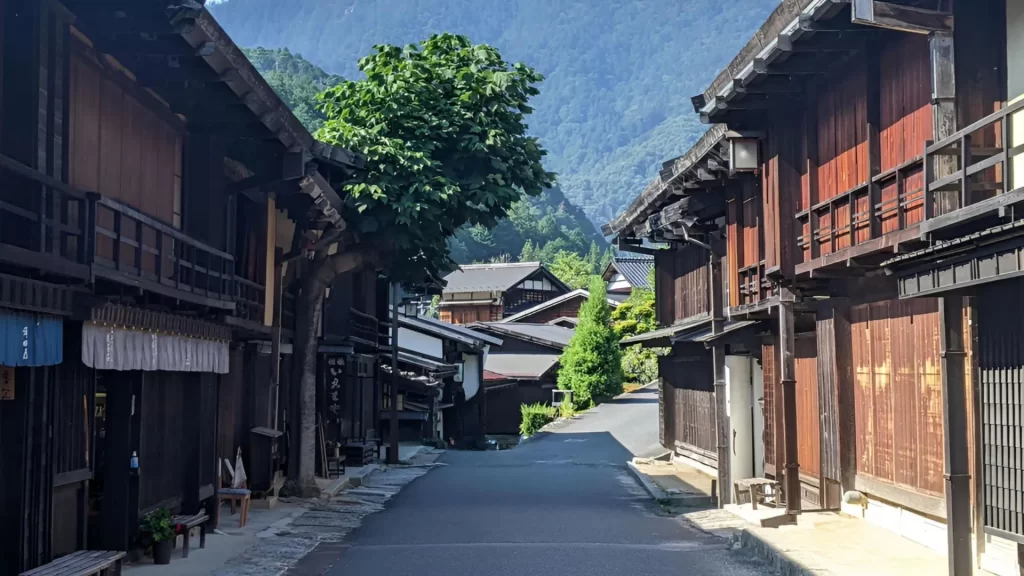
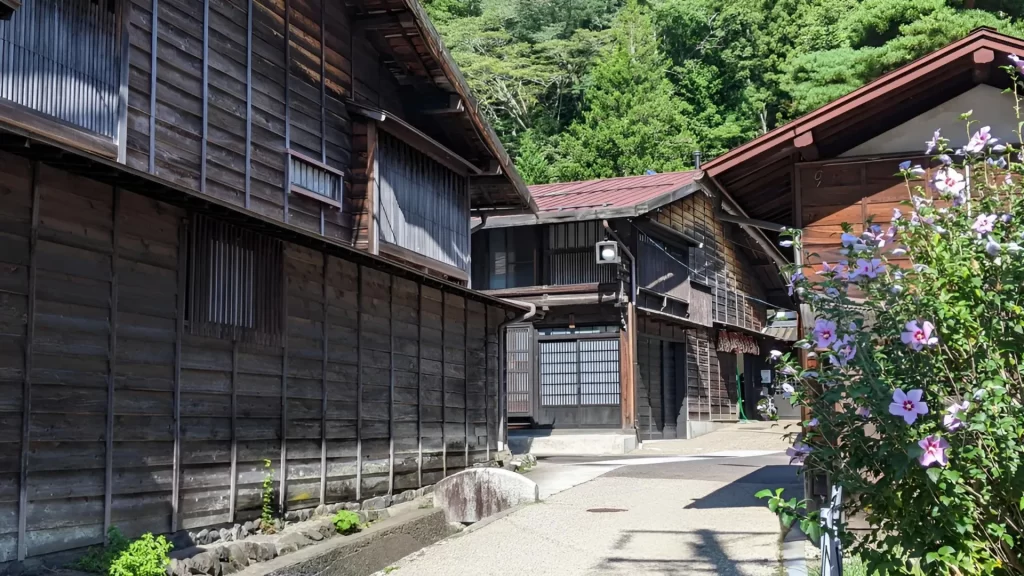
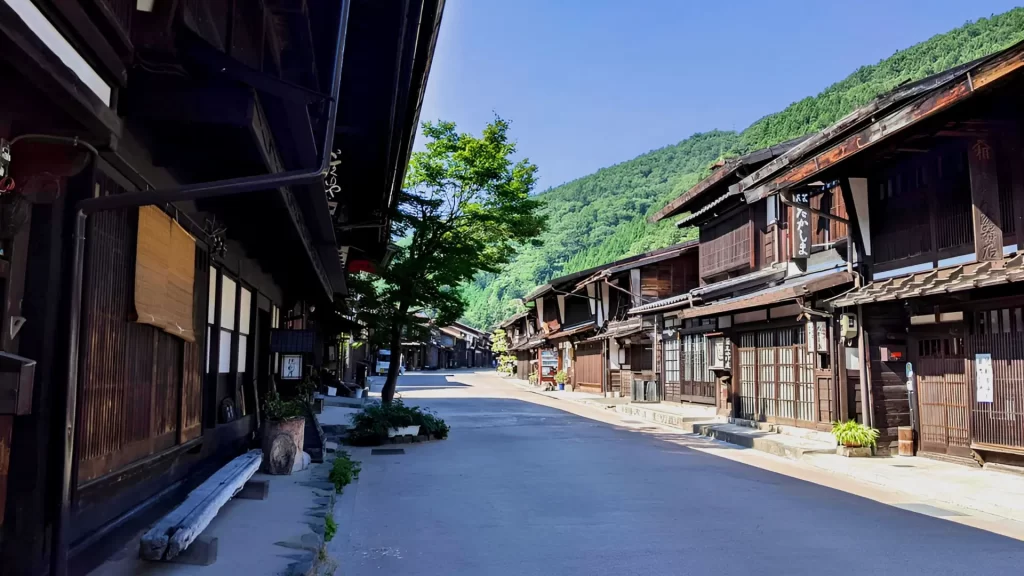
Once part of the Nakasendo, the “Kisoji” was a 70km / 43mi section of the road that skirted the flanks of Japan’s Central Alps. Sections of the road can still be hiked today, allowing visitors to access the three best preserved post towns on the Nakasendo – Narai-juku, Magome-juku and Tsumago-juku. Referred to as “Narai of One Thousand Houses”, “Narai-juku” was the largest of the three. Its location below the highest pass on the route, often compelled travelers to stay longer in order to travel during good weather. As such, Narai developed in wealth and size and to this day, is arguably the most impressive town along the Nakasendo.
©Peter Carnell
Should you wish to hike from Narai, the 6km / 3.7mi trail to the town of Yabuhara takes approximately 3 hours and includes the Tori Pass – the highest point of the Kisoji. Another former post town, Yabuhara’s development has unfortunately not been as considered as Narai’s but the hike itself is well-worth it and far less busy than the popular route between Magome and Tsumago.
Approximately 60 minutes drive from Narai, Tsumago-juku is another beautifully preserved post town. More popular than Narai, Tsumago is connected to the next town of Magome-juku by an 8km / 5mi trail which also takes around 3 hours to walk. The excellent preservation of both towns and easier nature of the walk – when compared to the hike from Narai to Yabuhara – results in the trail being busier but still worthwhile, passing through a mixed landscape of farmland and forest and past teahouses and abandoned historical homes.
©Peter Carnell
The Seasonal Beauty of the Nakasendo
The accessibility of the three post towns makes them all-year-round destinations, while the natural beauty of Kiso Valley means it is worth visiting in any season. Spring and autumn are particularly enjoyable times of year thanks to the annual cherry blossoms – typically blooming from late-March to mid-April – and striking red, orange, yellow and brown leaves of autumn – usually at their best from mid-October to November. Summer brings heat and humidity while winter sees the valley blanketed in snow and subjected to deep cold. Each season frames the towns with its own beauty and importantly, dictates when to hike.
Visitors to the Kisoji can also enjoy the serene beauty of the surrounding mountains, surrounding valleys and pristine rivers. Lying to the south of Narai-juku and north of Magome-juku and Tsumago-juku, Atera Valley is known for its emerald green and turquoise waters, which cascade and pool between enormous boulders strewn along the river. A 6km / 3.7mi road provides easy access to the valley including leisurely hiking trails over span bridges, past waterfalls and into the lush forest of what ranks among Japan’s most charming landscapes. Easily combined with visits to any of the towns, we highly recommend including Atera Valley in your itinerary when visiting Kiso Valley and the historic Nakasendo.
©Peter Carnell
*Should you wish to hike the Nakasendo, from Narai to Yabuhara or Magome to Tsumago, we recommend doing so in spring or autumn when weather conditions are typically excellent. Summer weather conditions can be extremely hot and humid while winter brings the risk of snow and ice. We do not recommend hiking at those times of year.
About Peter Carnell
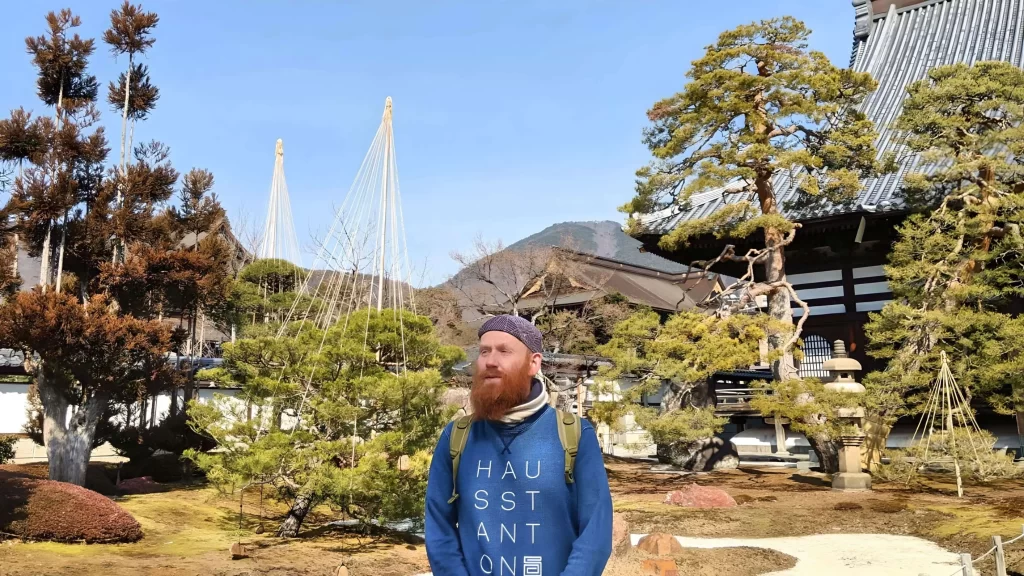
Peter Carnell is a freelance tour guide, writer and podcaster based in northern Nagano. Peter specializes in guiding in Nagano and surrounding prefectures which make up Central Japan, while also hosting the bi-weekly “Outland Japan” podcast – a podcast about travel, life and culture in regional, rural and the wilds of Japan. Peter’s guiding, writing and entire approach to Japan is underpinned by his academic background, having studied a Bachelor of Archaeology in the United Kingdom and a Master of Cultural Heritage and Museum Studies in Australia.
©Peter Carnell