KANAZAWA
Where Tradition Takes Shape: Exploring Architecture Around Kanazawa
Architecture is one of the things that can be best appreciated while traveling. Japanese architecture, while mostly keeping to a discernable theme, has a lot of variation. In and around Kanazawa City, you have the chance to see how feudal castles were constructed. You can also see that many of those themes live on in modern Japanese design. Not to mention the innovations that were made by ingenious entrepreneurs way back when.
Traditions Live On
Do traditional Japanese buildings really have no nails at all? What are the walls made of? Are the roof tiles clay or metal? Just about any question you could think to ask about traditional Japanese building techniques has been anticipated by the exhibits inside the Kanazawa Castle Park’s Gojikken Nagaya, which is the former guardhouse, barracks, and armory of Kanazawa Castle.
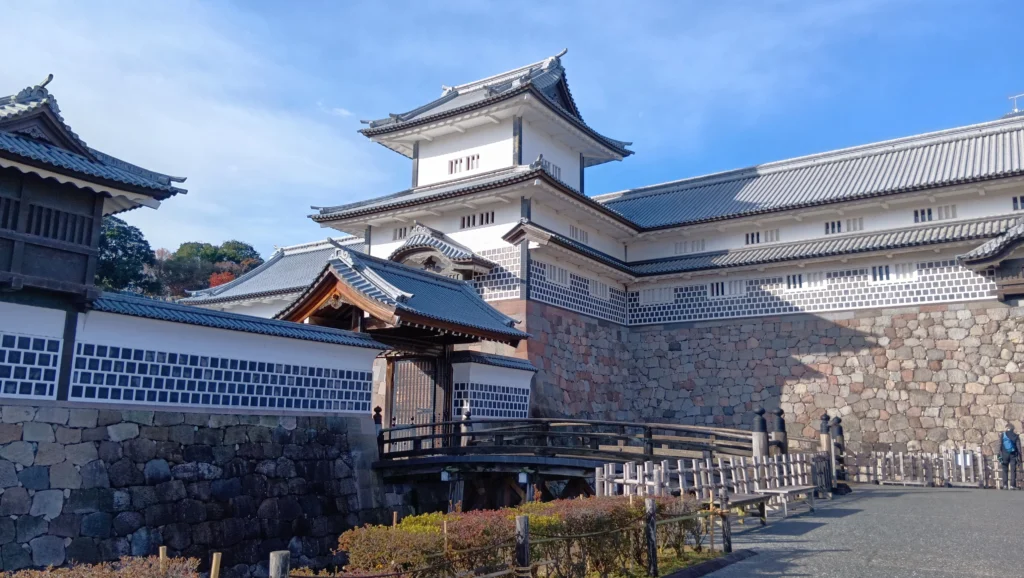
While its sheer size is impressive enough, the most striking aspect of the structure is its far tower, whose layout is not square but diamond-shaped. Various theories explain why this is, from stability in a seismically active country to ease of visibility in critical directions.
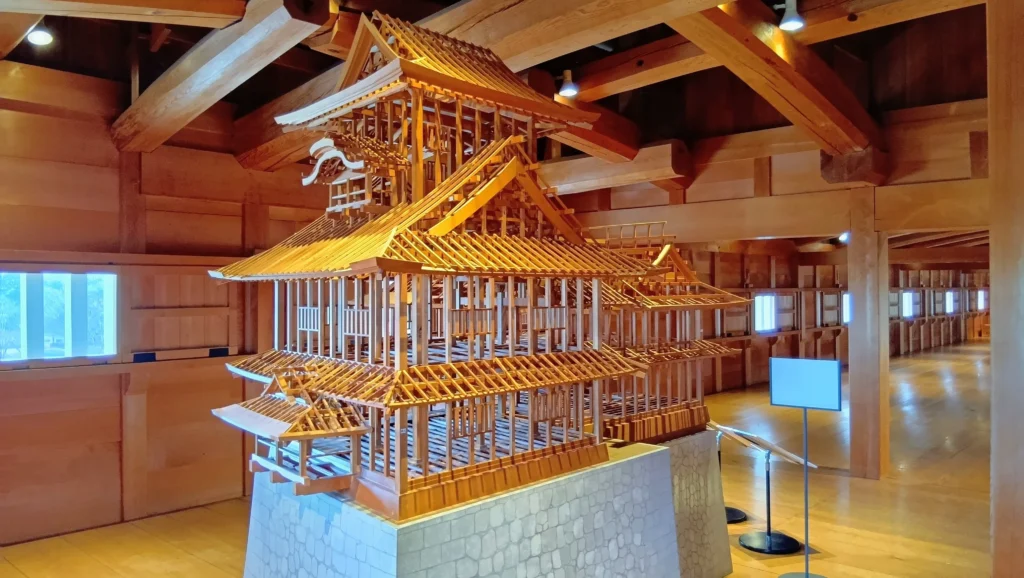
This scale model illustrates the unique shape of the Diamond Turret (or, Hishi Yagura). Whatever the reason for the complicated design, it’s a beautiful structure, faithfully recreated using technology that has been neither lost nor forgotten over the centuries.
Zen in Architecture
If you have time to visit the D.T. Suzuki Museum, do it. This is where anyone and everyone can experience Daitetsu Suzuki’s writings in a tangible way. Suzuki likened life to a sumi-e painting which must be begun, executed, and completed without the aid of preparatory pencil sketches or the safety net of corrections. There will be no do-overs. In order to create, the artist must be in harmony with his or her creation. Kanazawa-born architect Yoshio Taniguchi endeavored to create a space wherein visitors exist in the moment and feel for themselves what Suzuki described.
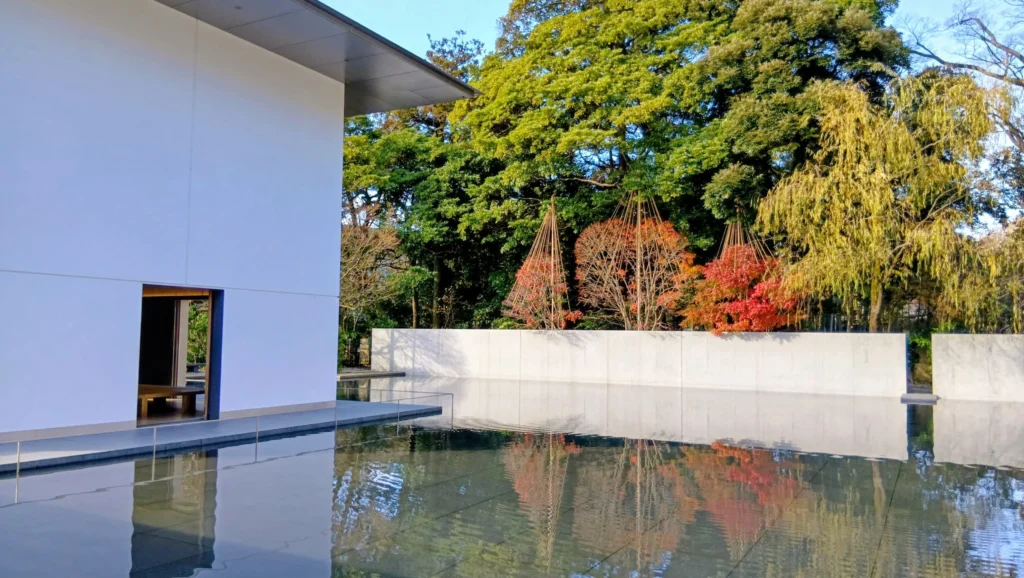
Immerse yourself in the tranquility of the Water Mirror Garden. Sit in the contemplative space or venture to the edge of the pool. Inhale and exhale. The fountain burbles. Ripples spread across the surface of the water. The reflections of leaves dance. It’s a matter of a moment to find Suzuki’s “gentleness of spirit” (or, yawaragi) here.
Interested in more modern Japanese architecture? The Yoshiro and Yoshio Taniguchi Museum of Architecture shows a large hall (Hiroma), its veranda, and a separate tea room (Chashitsu) which very effectively illustrate that simplicity does not mean “plain.” Each line has been deliberately chosen to celebrate the space without overcomplicating the design. This is how modern Japanese designers embrace the very best elements of traditional buildings.
Tradition Meets Maritime Innovation
While there are grander homes in cities like Kyoto with room after room of hand painted screen doors and delicately carved transoms overhead, I have yet to find a samurai residence as unique and memorable as the one belonging to the Uchiyama family in Ono, Fukui. It’s a bit off the beaten path, but if you’re taking the scenic route from Kanazawa to Kaga-Onsen, it’s not that far out of your way.
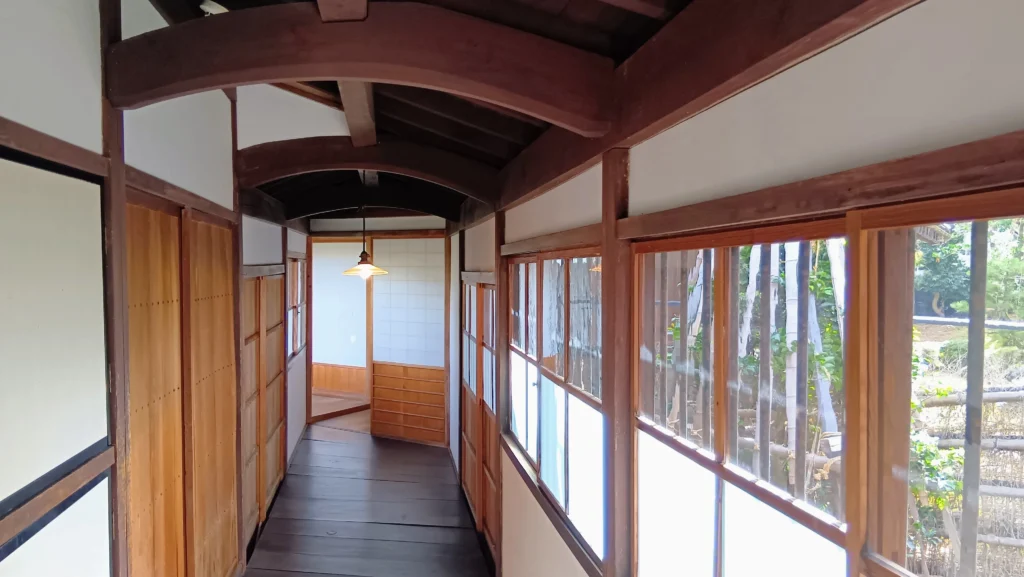
The house itself is, in my opinion, a reflection of the brothers who were born there. While the elder focused his energies on establishing business opportunities for his community in the domestic market, the younger sailed north to challenge Russia’s claim on the oil-rich island of Sakhalin. The distance between the Uchiyama brothers is mirrored in their home: two separate buildings connected by a long corridor.
The archways are curved, like an inverted ship’s hull. This design feature is repeated again, on a grander scale, in the second floor of the detached room (or, hanare). There, the entire ceiling from wall to wall has been assembled with bowed planks. However, this was not part of the structure’s original design. Apparently, when this upstairs space was converted from storage rooms to living quarters, a bit of additional headroom was needed, hence the curvature. It’s known as the “ship-bottom” ceiling for obvious reasons.
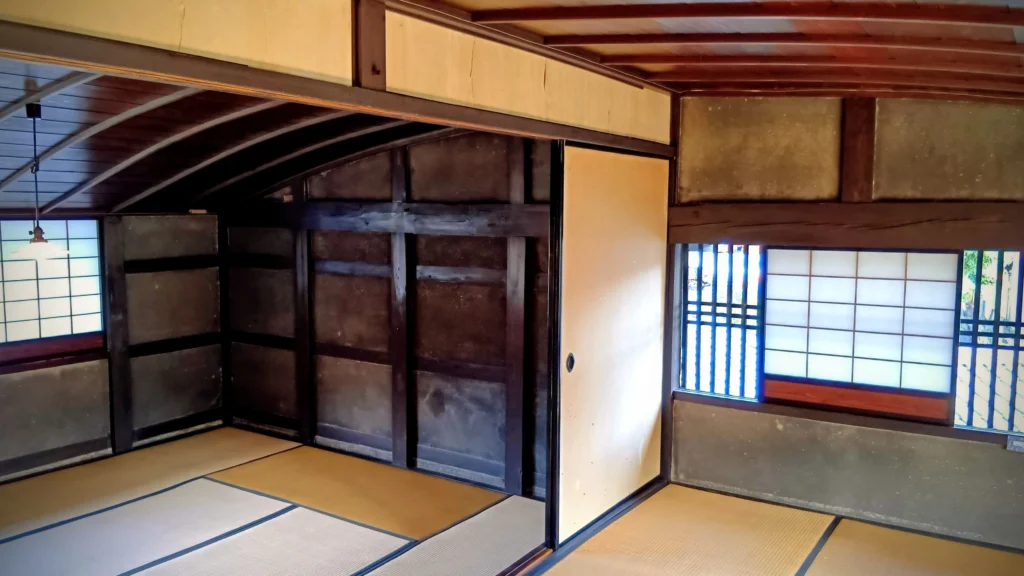
By all means, visit castles – both reconstructed and original – during your stay, but don’t forget the places that were meant to be lived in by normal people. There’s plenty of interesting, down-to-earth ideas to inspire your next round of redecorating.
About Keri Yazawa
Keri Yazawa, a resident of Kanazawa City since 2005, guides bicycle tours specializing in good food, quirky history, local craft making, and gorgeous landscapes.
Article photos and written content © 2025 Keri Yazawa. All rights reserved.