KANAZAWA
Mizuhiki Magic in Kanazawa: Discover Japan’s Most Unique Handmade Jewelry
Looking for gorgeous, traditional Japanese jewelry and unique personal accessories during your visit? While it’s fun to browse kimono shops in Japan, it becomes clear pretty quickly that the majority of the accessories are meant to be used to either pin up long hair or wrap around a wide kimono belt, so the search for something that is versatile enough for everyday wear and yet still looks “Japanese” can be frustrating.
Allow me to introduce a personal accessory option that comes from a surprising source but is still crafted from a very traditional Japanese art. This art is called mizuhiki.
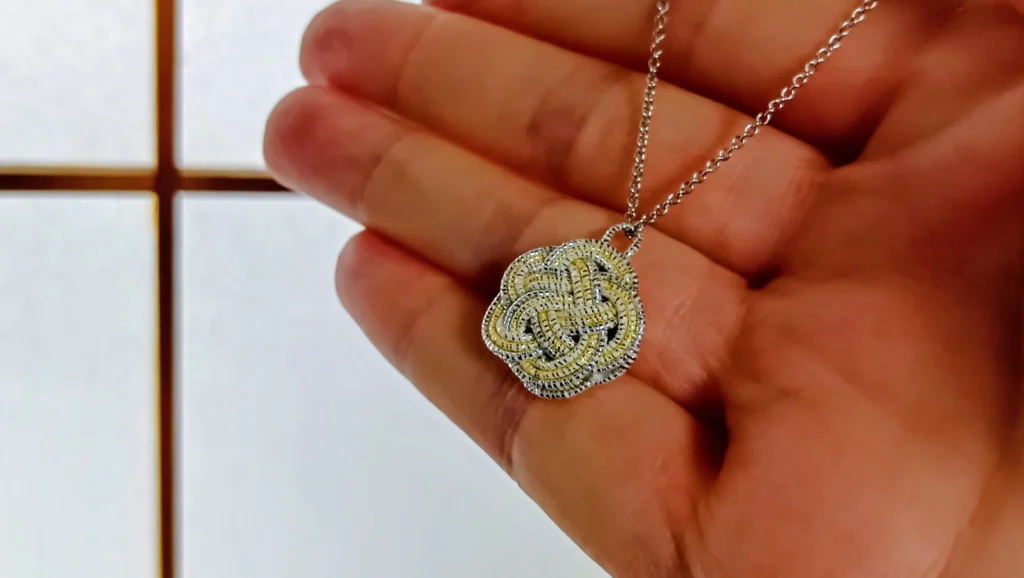
Is it gold? Silver? This pendant is neither. It is three long, thin cords that have been woven into the quintessential five-petaled Japanese plum blossom. But, you ask, if it’s not made from silver or gold, what is it made of?
Mizuhiki charms and jewelry are made from a material that is lightweight and easy to clean. If cared for as gently as you would treat your usual silver and gold possessions, it’ll last just as long. So what is mizuhiki? In a word, paper.
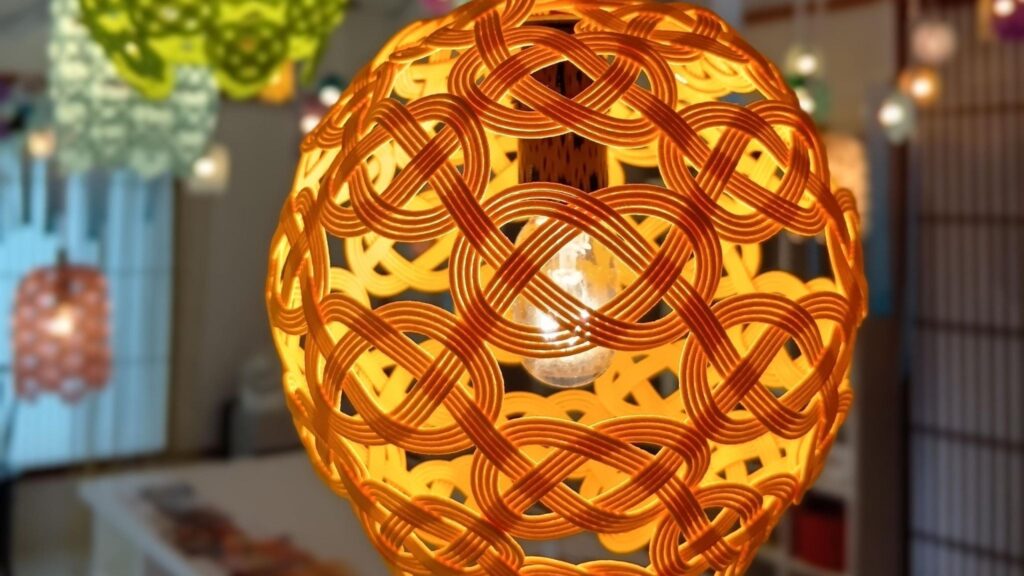
In Kanazawa City, a riverside gallery called Jiyukajin Mizuhiki Museum boasts an entire room filled with mizuhiki creations, including colorful lanterns that dangle from the high ceiling, from one end of the room to the other.
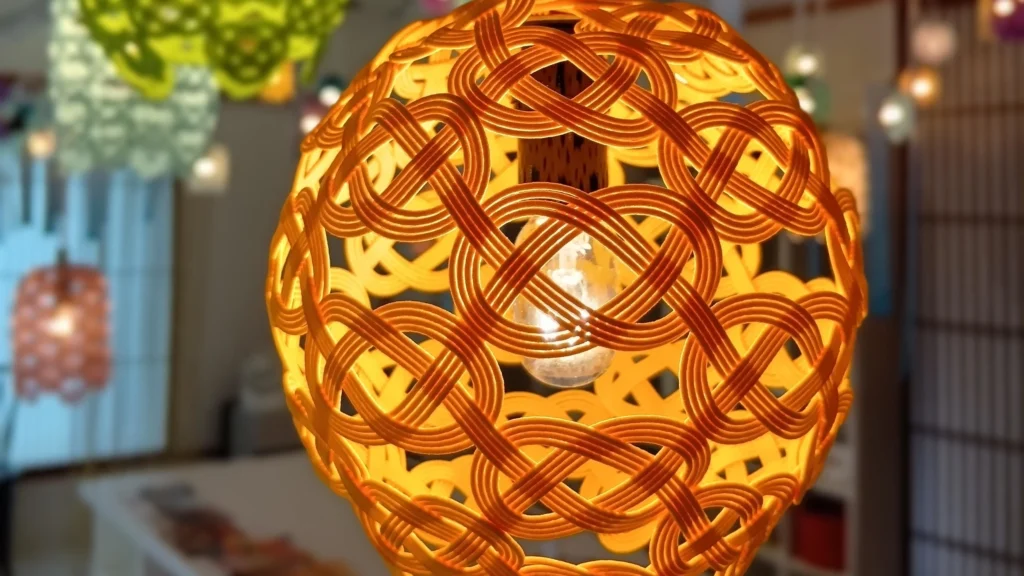
A mizuhiki “beaded” curtain is hung in a secluded alcove across from a wedding dress with a wide, kimono-style belt that has been tied into an impressive bow, made entirely of mizuhiki. There’s a cascading chandelier consisting of tiny, individual mizuhiki knots and a series of shelves which show off things like shot glass covers.
Jiyukajin Mizuhiki Museum is a vibrant and cozy place to take photos to share with everyone back home. Plus, the museum shop sells a selection of trendy accessories. (I was particularly impressed with the earcuff dangles.) If you time your visit right, you may be able to take one of their hour-long tutorials and create your own souvenir.
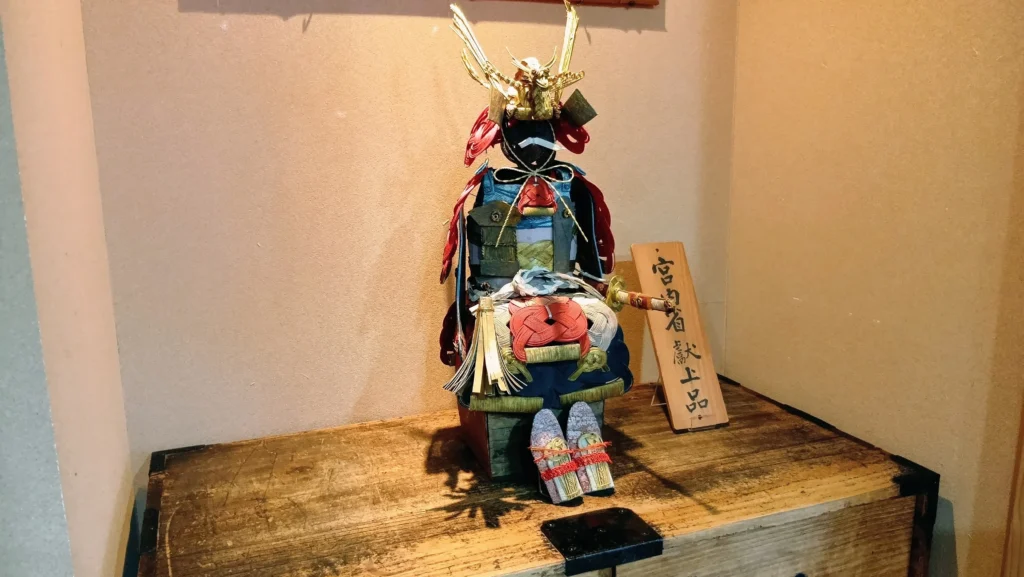
Mizuhiki was a craft with purely two-dimensional designs until a Kanazawa-born mizuhiki artist decided to think outside the box and create three-dimensional works. In 1917, he was commissioned to provide wedding decorations and his knotwork sculptures were displayed at a kimono retailer in town. Not long after that, he presented the Japanese emperor with a set of armoured mizuhiki dolls like this one, which was made by one of his descendants:
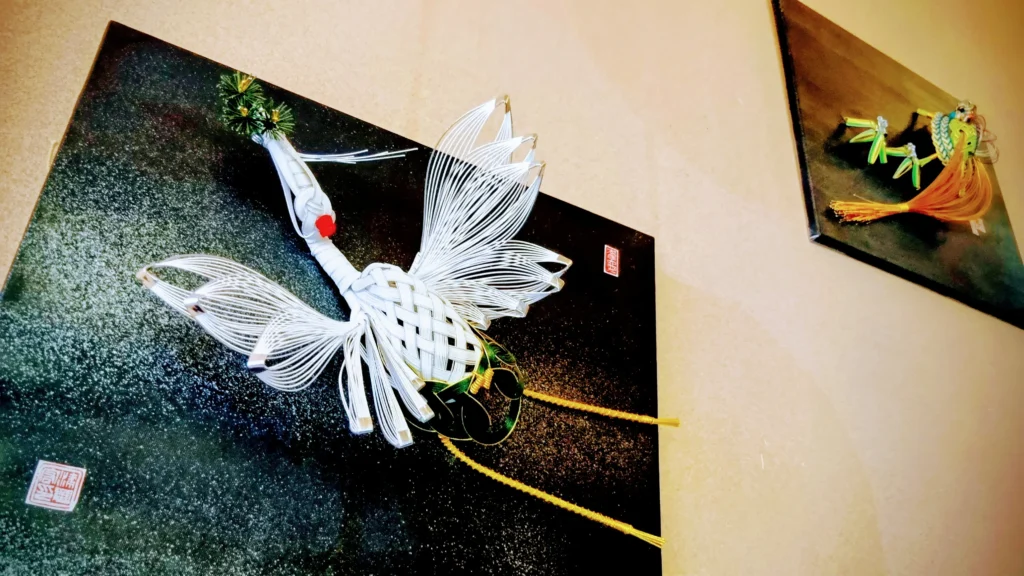
Such creations – and more that have been crafted by subsequent generations – can be viewed at his shop, Tsuda Mizuhiki, a family business still run by his great grandchildren today. Painstakingly handmade sculptures such as graceful, white cranes and colorful tortoises have been mounted and displayed on the walls of the stairwell leading up to the workshop in the loft space.
Looking for something more hands-on? How about making your own mizuhiki piece at the place where three-dimensional Japanese mizuhiki began! A workshop at Tsuda Mizuhiki requires a reservation made in advance, and the experience itself takes under an hour with the help of one of the shop’s instructors.
Depending on the item you’d like to make, you’ll be able to choose one, two, three, four, or five strings for your preferred design. (Of course, the more strings you choose, the larger the final result will be.) For the plum blossom pendant, I chose silver, platinum, and gold-colored strings. This particular pendant is double-sided in order to hide the loose ends, so you’ll have to make two little plum blossoms that are identical in size and shape. (Don’t worry! Your instructor will help.)
However, if you’re particularly dexterous, try your hand at making a three-dimensional sphere!
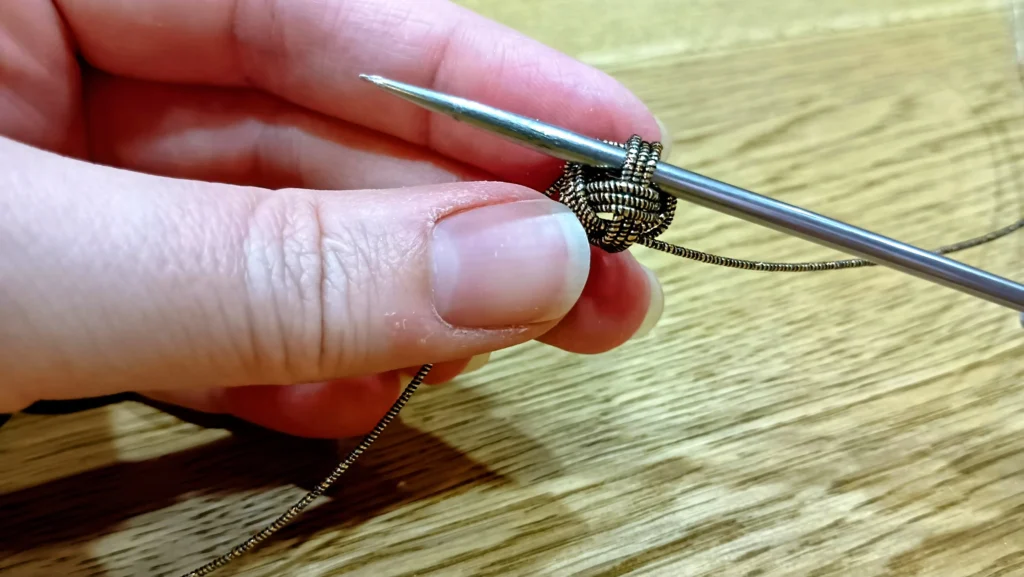
From a simple four-looped knot, a tiny ball can be created with a single string. It was a surprisingly meditative experience for me as, once the initial framework is formed, you simply follow the previous string around and around and around, like a current moving downstream. (Perhaps this is where the term “mizu-hiki”, which literally translates as “water-pulling”, really comes from?)
Once your work is completed, the staff will package it up nicely for you. Look how classy it turned out! No one back home will believe this wasn’t made by a professional artisan.
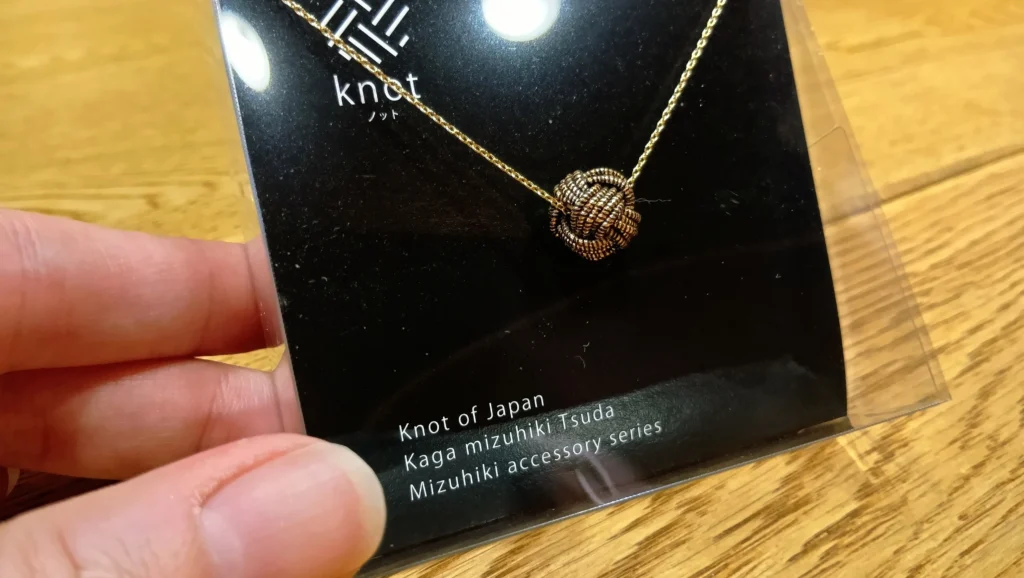
The fun doesn’t have to stop with one workshop. If you feel brave, purchase one of the mizuhiki kits from the store and follow the English instructions to make something at home.
Tsuda Mizuhiki sells a variety of personal accessories and jewelry that are timeless and classic. Or, take one of their handcrafted samurai dolls home with you! From mounted artwork to windchimes and hair ties to earrings, you’re sure to find a one-of-a-kind piece of Japan that speaks to you.
About Keri Yazawa
Keri Yazawa, a resident of Kanazawa City since 2005, guides bicycle tours specializing in good food, quirky history, local craft making, and gorgeous landscapes.
Article photos and written content © 2025 Keri Yazawa. All rights reserved.