KANAZAWA
Kenrokuen: The Timeless Garden of Beauty, History, and Mystery
The Secrets of Kenroku Garden
Any search of Kanazawa City’s top sightseeing spots is going to spit out the same results: the geisha districts, the castle park, and the garden.
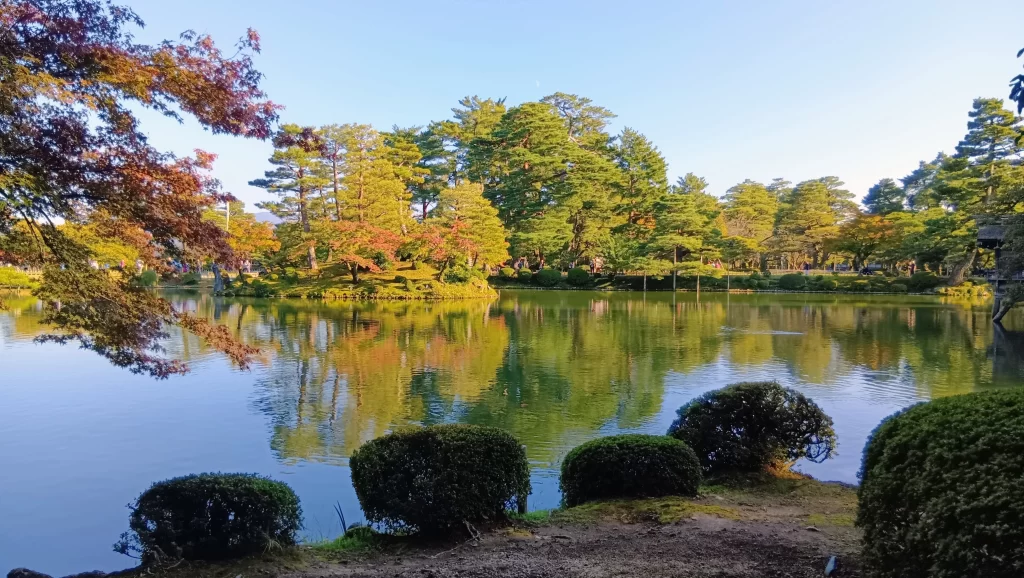
The garden, called Kenrokuen, is a wonderful place for a stroll. There is transient beauty to enjoy with every season: plum blossoms in early spring, irises in summer, the changing leaves in fall, and the bamboo and rope supports (called yuki-zuri) that are erected in winter to help the tree branches support the weight of the area’s heavy, wet snow without snapping.
Meandering paths lead visitors over bridges and into pavilions. Hours could be spent here, admiring the greenery and the skill needed to maintain it. Hours. But you’d go home having seen only the loveliness on the surface. So read on if you’re keen to get the dirt on Kanazawa’s iconic garden!
The Water Fountain
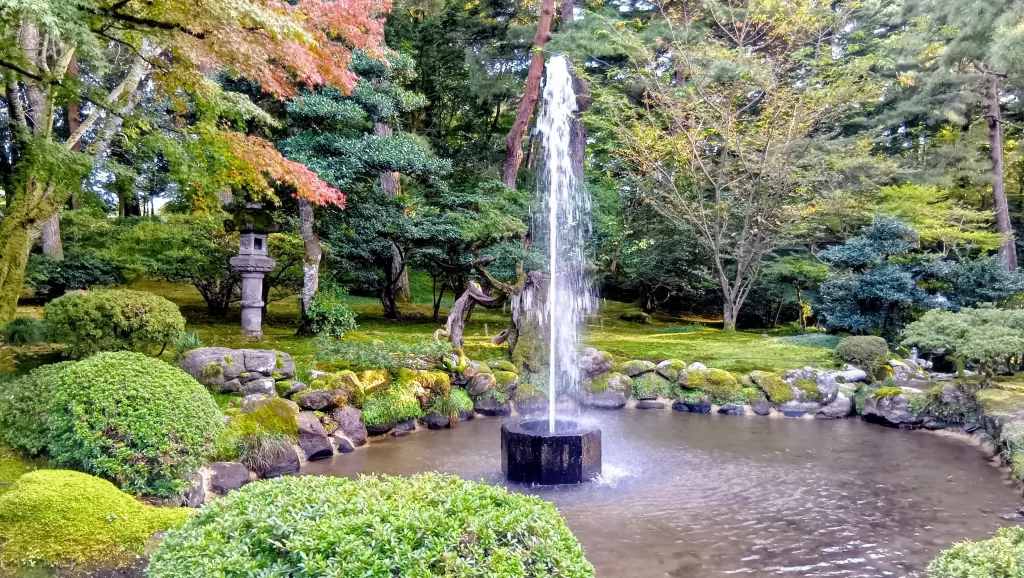
Built in the 19th century, this is the oldest water fountain in Japan. What makes it even more remarkable is the fact that it was a challenge to construct: the garden is located at a higher elevation than the water source, the nearby Sai River. So how to siphon the water up to where it needed to be?
New engineering techniques had to be invented. Eventually, a daring engineer was found to undertake the task and manage it he did! The end result was truly spectacular for the time: an unchanging geyser of water shooting 3.5 meters high in the air.
In fact, the lord of Kanazawa was so satisfied with the result, that he ordered the engineer to be killed. Better that than a rival lord achieve the same feat or something even more impressive in his own garden! It was all for naught, however – something like a decade later, the same technology was independently invented elsewhere in Japan. Woe be to he who overachieves.
The Stone Lantern
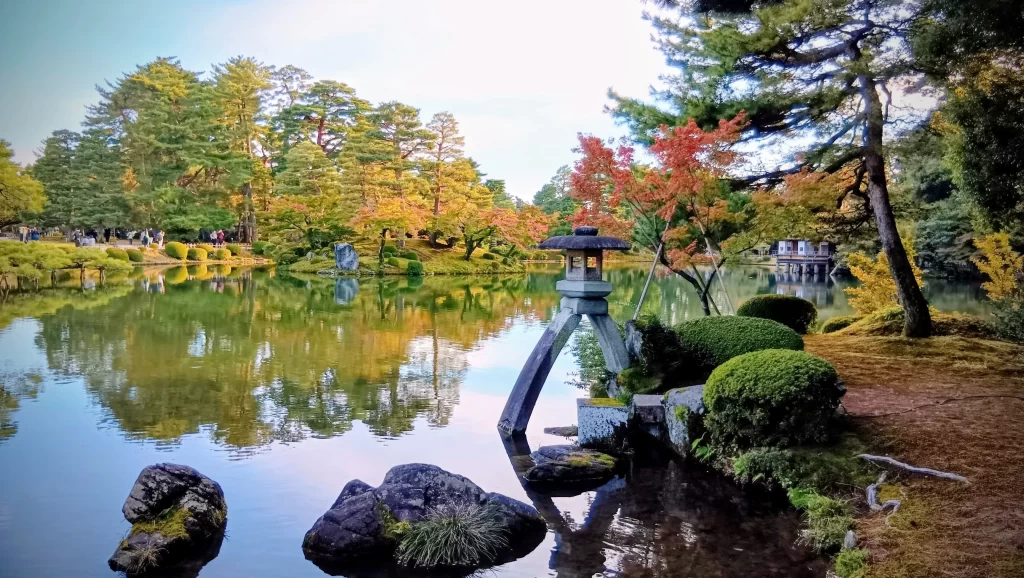
If you’ve seen a picture of Kanazawa’s Kenrokuen, then you’ve likely already seen its asymmetrical stone lantern. It sits beside a tiny stone bridge, overlooking a lovely pond that holds the tortoise (a small island) and the crane (a painstakingly-pruned pine tree that swoops long and low over the water).
The lantern poses eternally with its shorter leg propped up on a block. It looks jury-rigged, silly and innocuous. It wasn’t always so tragically lopsided. Once upon a time, it had been carved perfectly. But then a tumble, perhaps from an earthquake, sent it crashing and, yes, one of its poor legs broke off.
However, when it came time to repair it, the craftsmen noticed how its design seemed to be improved, so the lantern was allowed to keep its war wounds. Neither the legs nor the design are what its creator had originally intended, but there’s a quiet dignity in this lantern that, once you know its story, you can fully appreciate.
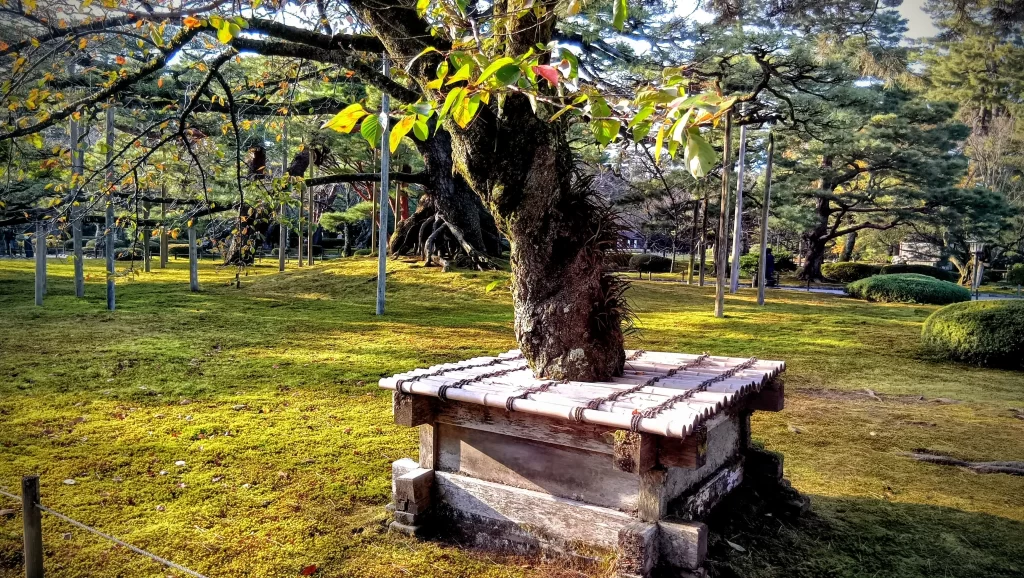
The Well and the Cherry Tree
Near the back of the garden, there is a bamboo screen covering the entrance of an old well. From inside it grows an old, gnarled cherry tree, arching over the footpath like a weeping willow.
It is said that, some centuries ago when the garden was also the site of an elaborate estate, a young maid escaped into the night. She was pursued. Hunted.
Whether her attacker caught up with her or she took her own life is uncertain, but it is said that her body rests at the bottom of the well, and it was only after her death that the cherry tree began to grow. For sure, it was safer to be a cherry tree than a young maid in feudal times.
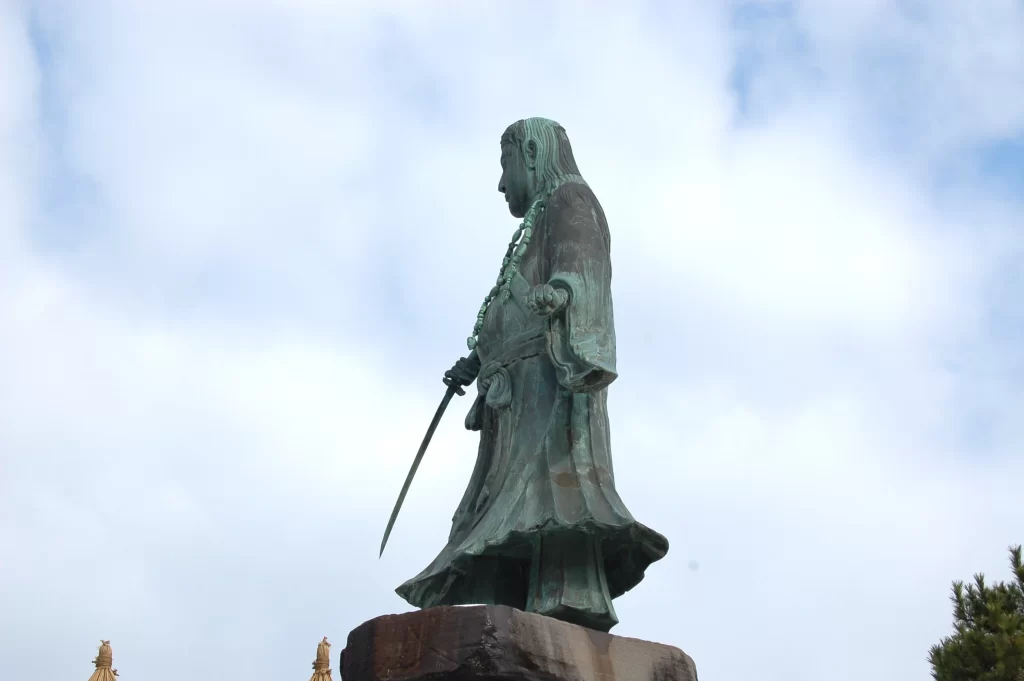
The Bronze Statue of Yamato Takeru
There is no shortage of statues of folk heroes and legendary leaders in Japan. Throw a pebble and you’re likely to hit one, but if you take the time to investigate every corner of Kenrokuen and happen to come across this monument, give it a longer than usual glance. Eventually, you’ll notice that something is missing. Something endemic to statues the world over.
Go on and look. I’ll wait.
Give up? OK, I’ll tell you what it is you’re not seeing: bird droppings. The statue was cast from a bronze alloy containing toxic levels of mercury. Birds have learned not to go near it. People, not so much, hence the fence. Cross it at your own risk. The birds certainly won’t.
The Cost in Time and Wealth
Kenrokuen wasn’t always as big as it is today. It was started in the 16th century shortly after the Maeda family were given the territory in which Kanazawa City is located. Over the years, it has grown little by little, bit by bit, with new features and feats being added.
As someone who can’t even keep up with her own herb garden (the poor little things always wilt and die on me), I can only marvel at the dedication that the Maeda family showed theirs. Not without good reason, however.
The Maeda family were in a bit of a pickle. The land they’d been given was one of the top rice-producing areas in Japan. Second only to the holdings of the shogun. And, as it happened, the shogun (and his successors) were consistently paranoid about uprisings. A single rumor that the Maedas were amassing a larger army and planning a coup would have brought the shogun right to their doorstep with one aim in mind: burn the castle to the ground first and ask no questions later.
In order to avoid these potentially lethal rumors, the Maedas had to do one thing: spend their money. The garden wasn’t the only project that they poured their excess wealth into, of course, but it is one of the most visible and, since the end of the feudal period, accessible to everyone.
About Keri Yazawa
Keri Yazawa, a resident of Kanazawa City since 2005, guides bicycle tours specializing in good food, quirky history, local craft making, and gorgeous landscapes.
Article photos and written content © 2025 Keri Yazawa. All rights reserved.