KANAZAWA
Quiet Minds in Kanazawa: The Legacy of D.T. Suzuki and Nishida Kitaro
If someone says “Japanese philosophy,” the first word that pops into your head is probably “Zen,” and the first name to come to mind is undoubtedly D.T. Suzuki. Whether you’ve read his works or not, it’s possible to experience Zen for yourself during a visit to Kanazawa City.
D.T. Suzuki
Daisetsu Taitaro Suzuki, a native of Kanazawa City, spent his considerably long life – he lived to the age of 95 – producing written works that introduced the philosophy of Zen to the rest of the world, but his greatest contribution was in scouring written works in a variety of languages, tirelessly searching for ways to make Zen more relatable to those of us who did not grow up in Japan.
The D.T. Suzuki Museum in Kanazawa City (designed by local architect Yoshio Taniguchi who studied Suzuki’s works before drawing a single line) stands as a metaphor for Zen. Passing the reception desk, you enter a long, dark corridor that could be likened to the “tunnel vision” that’s common when we focus totally on the achievement of our goals. Halfway down, stop. Look to your right. Angled, floor-to-ceiling windows direct your gaze to a stately camphor tree. Of course we all know that there are spectacular things in nature and sometimes we even “stop to smell the roses” when our paths lead us to them, but this is not what it means to live a life of Zen. For most of us, these moments are fleeting and we eagerly resume our head-long charge into the future.
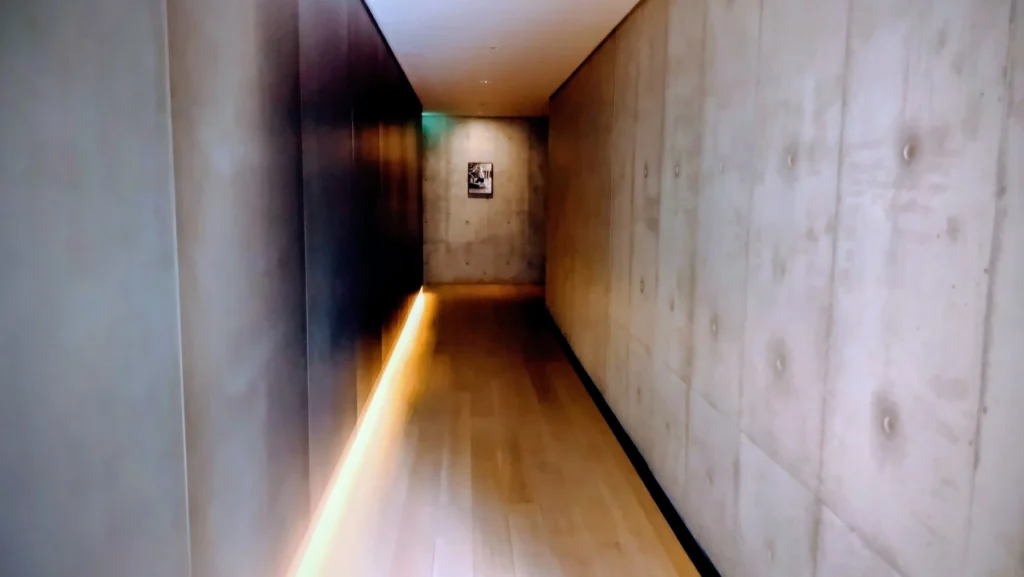
Likewise, the corridor continues until you must stop. A portrait of Suzuki hangs on the wall, not so much like a stop sign but an arrow at a crossroads: pause your mad dash! Take the other road! Where does that road lead? Suzuki will show you…
Transcendence by Poetry
Although Suzuki was, himself, not a poet, he held a deep appreciation for the art of poetry. For Suzuki, the words themselves were merely a byproduct of spiritual awareness. Without writing or uttering a single word, anyone could be a poet so long as his or her mind was capable of comprehending the essence of a concept – to see an object as it is – and thereby reach a state of mind in which imagination and creativity are boundless. In his 1963 work “See the Realm of Poetry,” Suzuki wrote: “People who do not have the eye to perceive the essence of things cannot understand the realm of poetry.”
Acts with Gentleness
Suzuki also stresses how important it is to lead one’s life with gentleness. When you hear the word “gentle,” you probably think of being careful, quiet, tactful, and basically demonstrating good manners. Suzuki would not disagree with that, but he would add that being gentle opens us up to harmony between the human spirit and the natural world around us. He likened the traditional Japanese tearoom to a man-made construction of gentleness for the senses: “gentleness of touch, gentleness of odor, gentleness of light, and gentleness of sound.” This quote comes from “Zen and Japanese Culture” (1959), a text that, if you’ve studied Asian religions and philosophy, was probably required reading.
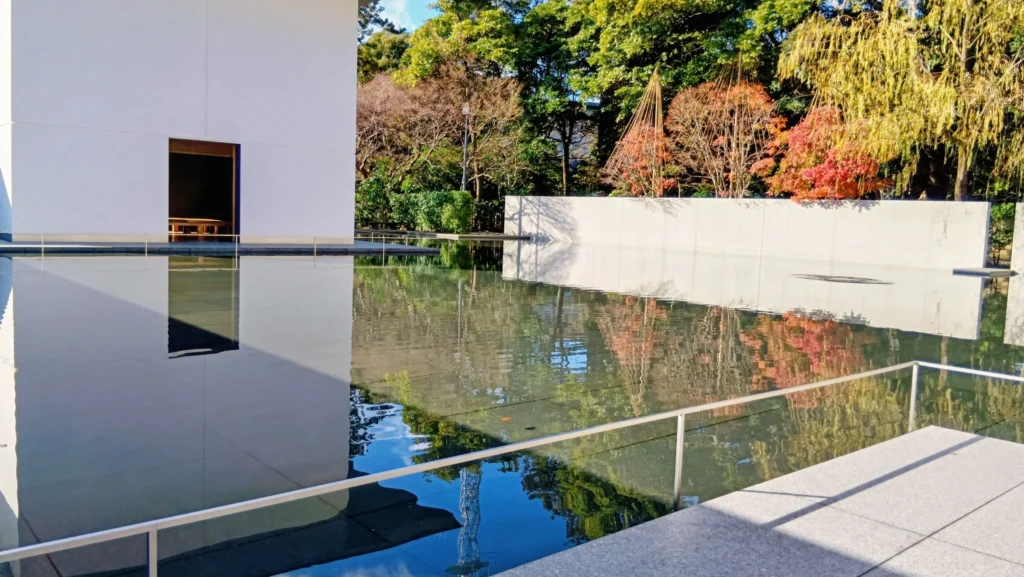
In the D.T. Suzuki Museum, you’ll be immersed in that sensory experience when you surround yourself with “gentleness” in its indoor Contemplative Space which looks out over a shallow pool.
The flat-roofed, concrete structure seems austere at first glance but once you step inside, you find yourself in a space imbued with kindness and grace. Your thoughts settle. Your mind absorbs the nuances of time and nature and one’s own presence in their midst.
A Life of Harmony
Of the many poems that D.T. Suzuki translated was this one by the renowned 17th century haiku poet Matsuo Basho:
“Into the ancient pond
“A frog jumps.
“Water’s sound!”
No, Suzuki isn’t telling us how cool the “plop!” of an amphibian belly-flopping into the water is. (I mean, yes, it is cool, but there’s more to it than that.) He’s talking about the harmony of paradise (that is, the ancient pond) with our short, human lives and how we can and should experience it (by breaking the silence) in a way that is non-destructive.
During your visit, linger at the Water Mirror Garden. Feel the breeze and watch the branches waving to and fro over the surrounding wall.
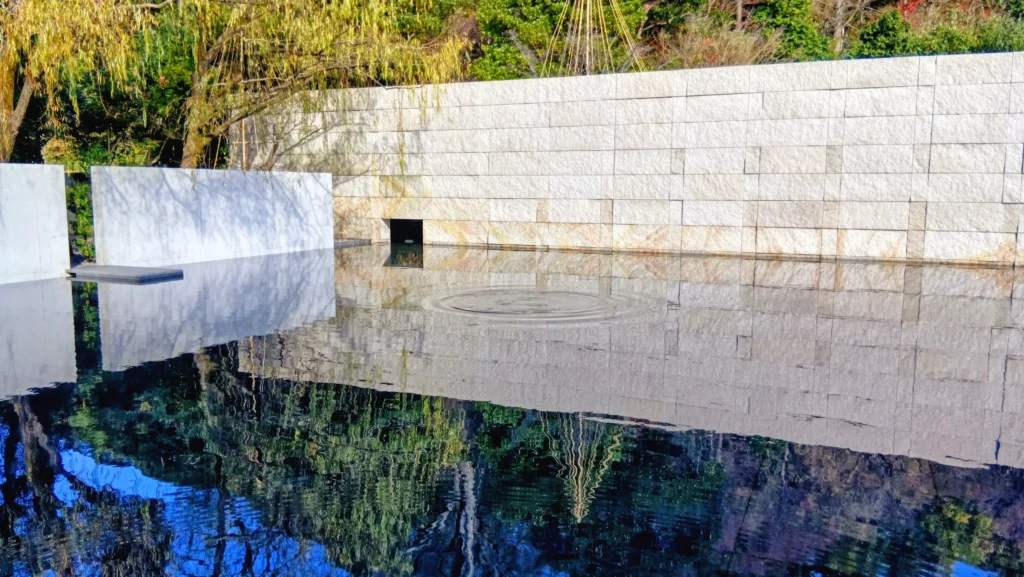
Plop!
A burble in the glassy surface of the water – it’s a brief moment of sound and motion, like a single human life in the vastness of time and nature.
Philosophers and Friends
Although D.T. Suzuki is Japan’s most famous author and translator, worldwide, of philosophical texts, there is another – a nationally renowned philosopher – that you might not have heard of: Kitaro Nishida. Nishida, born in the nearby community of modern-day Kahoku City, went to school with Suzuki in Kanazawa City and the two of them remained friends throughout their lives.
The Path to Kyoto
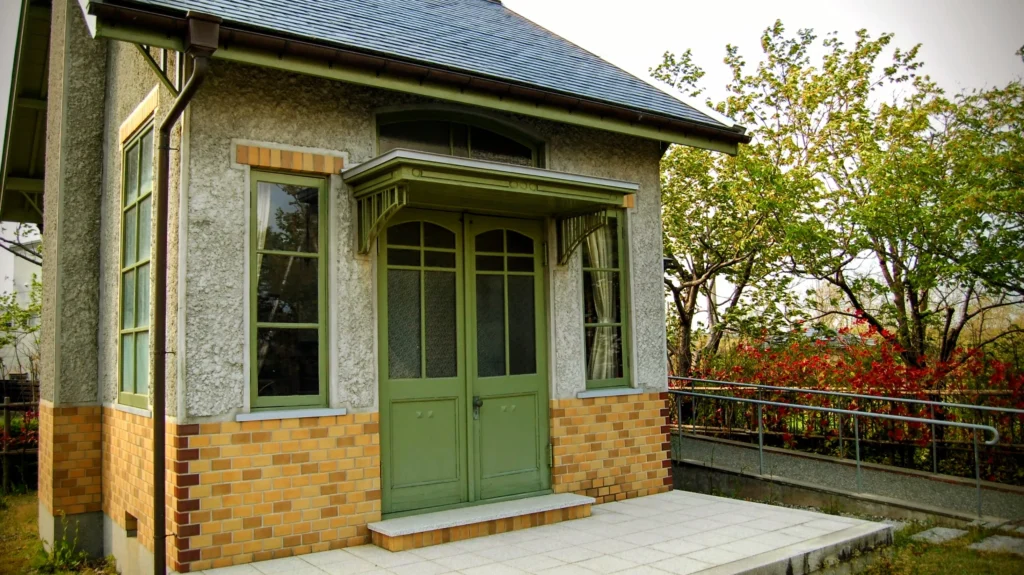
Where Suzuki traveled the world lecturing, Nishida relocated to Kyoto to build a career teaching at Kyoto University. His philosophical approach to life came at a time when the young men of Japan faced the anxieties of being drafted to fight in continuous wars; after two wars with China and a third against Russia in as many decades, tradition and religion no longer delivered solace or acceptance of the sacrifices that national pride required. Nishida’s common-sense, direct approach to life made his philosophy so popular that he is credited with being the founder of the Kyoto School of Philosophy, Japan’s first system of modern philosophical thought. At his museum, his own personal study still stands, moved from Kyoto and faithfully preserved.
A New Perspective
But what did Nishida say that was so moving? To understand this, you have to recognize that, at the core of Japanese society, is the vital importance of the group, not the individual. That’s not to say that the Japanese are a society of followers, but there is a deep respect for one’s elders and leaders. These are the people who have the right, either by birth or life experience, to make decisions for the community as a whole. So when their government told them it was Japan’s destiny to go to war, the people united in support of that aim. Still, war gets old fast.
So when Nishida advised caution in statesmanship and national reforms with words similar to the following, “The more extraordinary (or, perhaps urgent) the situation, the more we must remain calm and think from a deep and long-term perspective,” intellectuals were ready to listen.
One Step at a Time
A lifelong friend and correspondent of Nishida, Suzuki once described and admired him thusly: “…the way he would move steadily forward, staring straight ahead. Just like an ox, he would focus single-mindedly…” This stubborn resolve and steady attention to detail can be seen in the very construction of the museum, from the towering structure of the main building to its stark outer walls and monoliths.
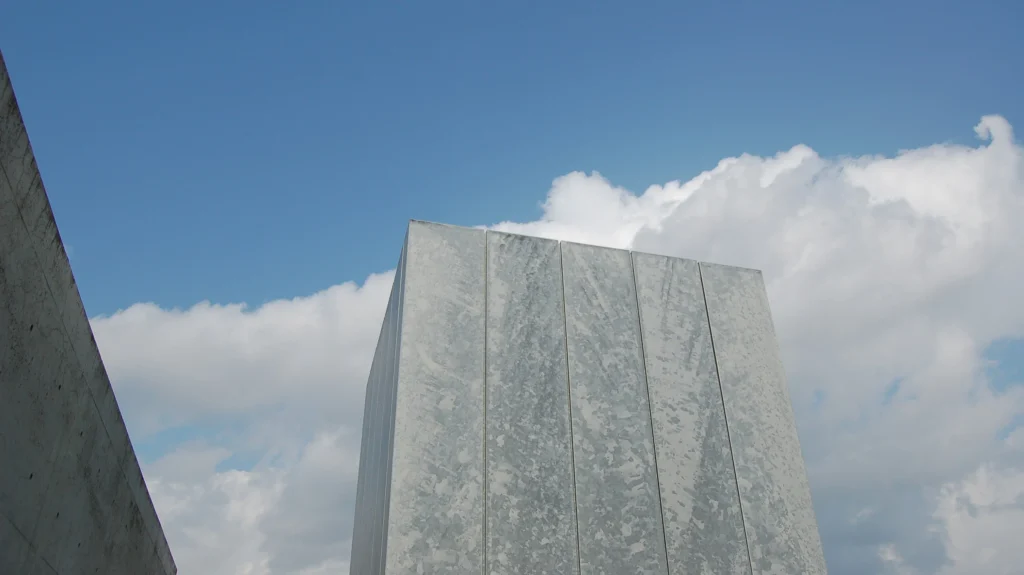
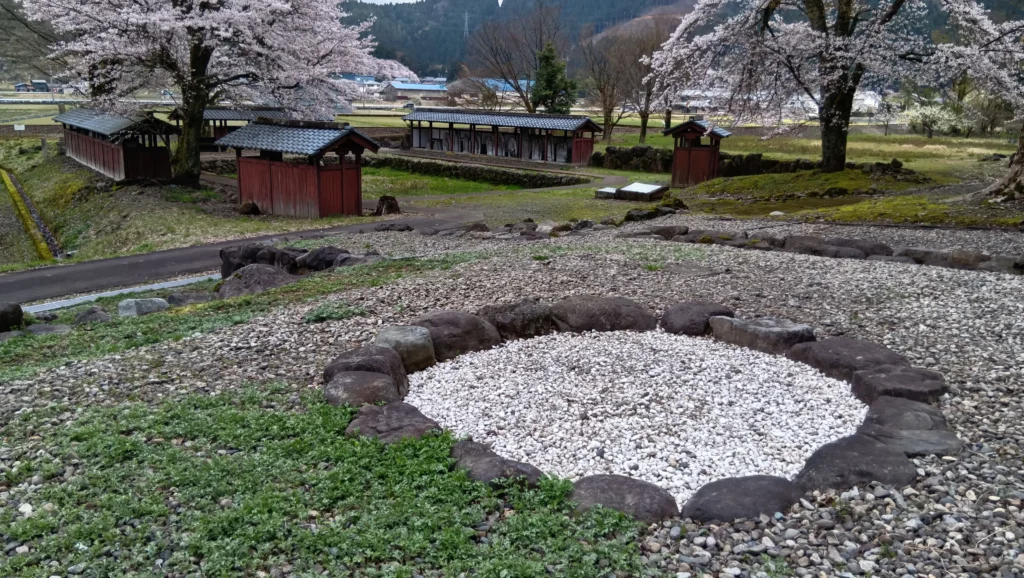
His encouragement in a letter to one of his students fantastically illustrates Nishida’s systematic approach to problem-solving: “The development of thought is like climbing a mountain. Unless you climb one mountain, you will never know the direction of the next mountain or how to attack it” (excerpt from a letter to Soei Kimura, 1932). This comparison is perhaps why the Ishikawa Nishida Kitaro Museum of Philosophy (located in his hometown) overlooks a plain of rural communities and rice fields with a gorgeous view of majestic mountains in the distance.
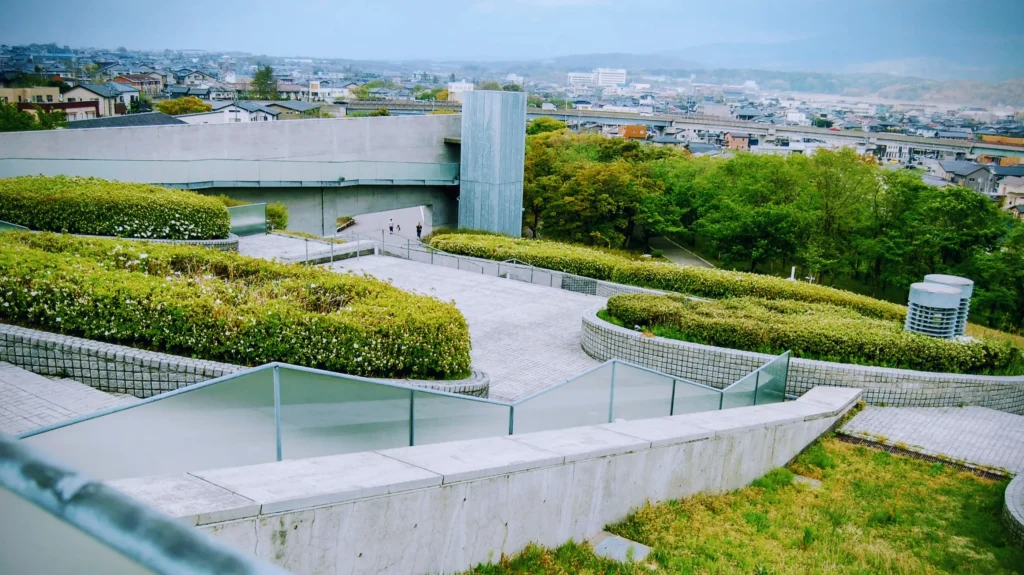
Visitors are funneled up through the twisting Grove of Philosophy to ascend the Garden of Stairs before entering the building itself. In the first floor gallery, an exhibit titled “Invitation to Philosophy” welcomes you to pause beside freestanding circular windows and think on the words of well-known philosophers.
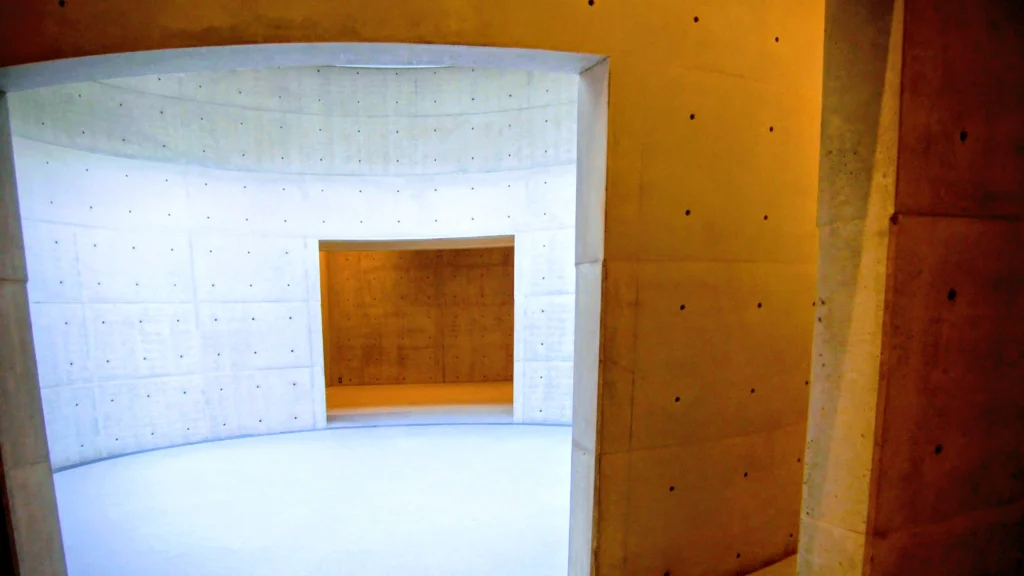
In the basement, a well of contemplation called “The Space of Emptiness” encourages visitors to gaze upward – straight upward without any distractions to the left or right – at the sky. So why not call it “The Space of Sky”? Because the Japanese word for “sky” is “sora” which literally means “emptiness.”
In the Flick of a Wrist
The most revealing portion of the exhibit is its collection of calligraphy. Where Suzuki adored poetry, Nishida revered calligraphy. Many of his personal works are on display. According to Nishida, calligraphy was the most direct method of illustrating the natural rhythm of our lives. Unlike with paintings and sculpture, there is very little subjective opinion (or personal baggage) involved. Japanese calligraphy consists of a sheet of paper, ink, a brush, and a defined word or phrase: these are the materials. The artistry – the individual’s character – is expressed in the movement of the brush, a moment of action as unique as the person wielding it.
Two philosophers. Two friends. One who reached out into the world in order to open minds and one who worked to guide the minds of both the students and statesmen of his nation – Japan would not be the country it is today without them.
About Keri Yazawa
Keri Yazawa, a resident of Kanazawa City since 2005, guides bicycle tours specializing in good food, quirky history, local craft making, and gorgeous landscapes.
Article photos and written content © 2025 Keri Yazawa. All rights reserved.