KANAZAWA
Traditional Japanese Umbrellas in Kanazawa: Craftsmanship That Lasts Decades
Kanazawa is a city known for its excellence in culture, nature, cuisine, and of course artisans. Feudal samurai lords of the area spurred the quality of craftsmanship to such a degree that many locally made products were – and are still to this day – considered the best of the best.
Case in point: the Japanese umbrella.
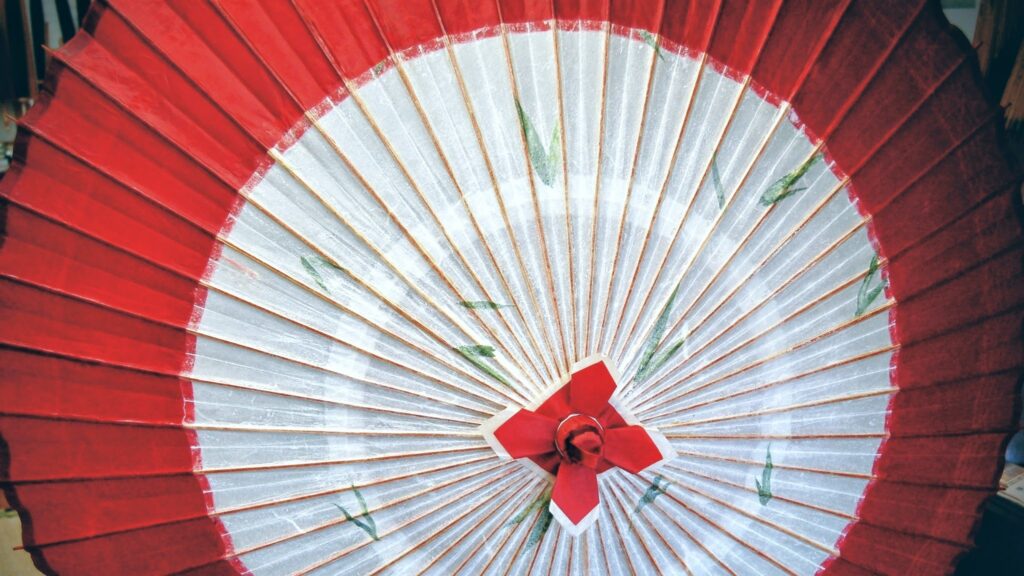
There’s a saying in Kanazawa: “You might forget your lunchbox but don’t forget your umbrella!” Why? Because the weather is notoriously (and historically) unpredictable: residents might wake up to a fine, sunny day and then find themselves having lunch while gazing out the window at pouring rain. Which is why just about everyone who lives there carries an umbrella with them no matter what the day’s weather report promises. Whether it be the steamy, summer rain or the heavy, wet winter snow, a good umbrella can quickly become your best friend, and that is why the very best, most durable umbrellas are made in Kanazawa.
A visit to the Ishikawa Prefectural Traditional Arts and Crafts Museum will show off a few striking examples of Kanazawa’s exceptional umbrellas and there are even a few for sale in the museum shop, but if you have the time, make the trip across the Sai River to the workshop and gallery of the city’s last remaining manufacturer of traditional Kanazawa umbrellas.
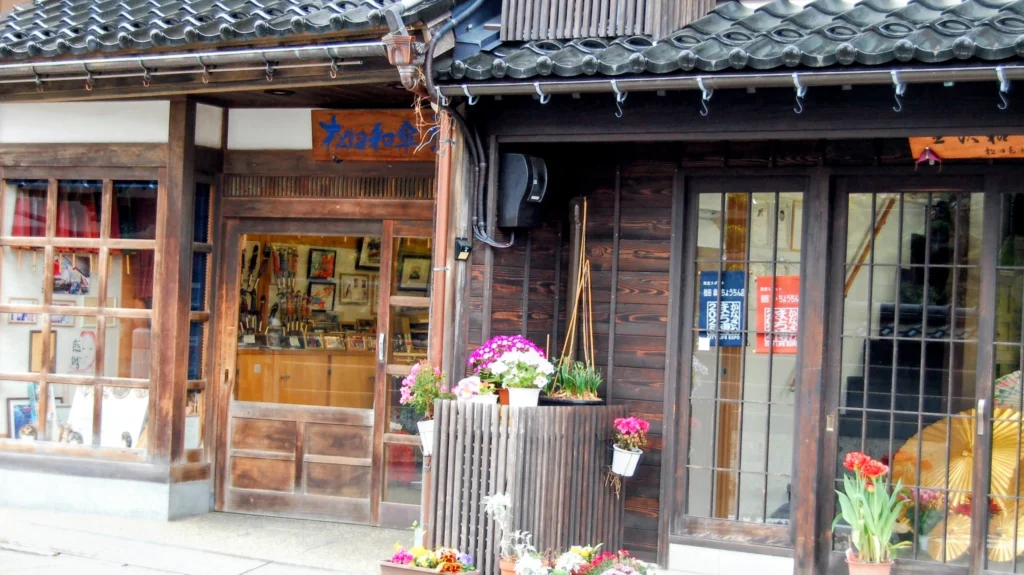
At one point, over a hundred umbrella makers called Kanazawa home. These days, Mr. Shigeki Matsuda, a third generation umbrella craftsman, and his team are the last to keep the traditional techniques alive.
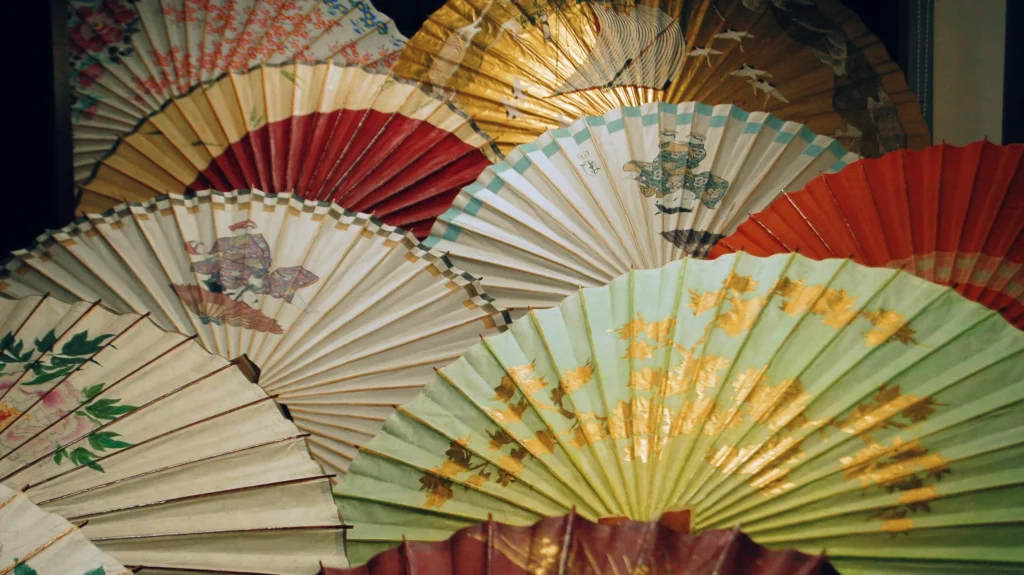
With just a glance, it’s easy to see that these umbrellas are works of art, not only because of the quality of the paper or the hand-painted illustrations, but because of the strong, arching spines, or “bones”, of bamboo, the intricate herringbone weave of the threads that provide the tension necessary for stabilizing the umbrella’s structure, and the elaborate reinforced stitching along the umbrella’s outer edges which are as decorative as they are functional. All of these materials are made in Japan, if not in Kanazawa City then in neighboring prefectures such as Fukui and Gifu.
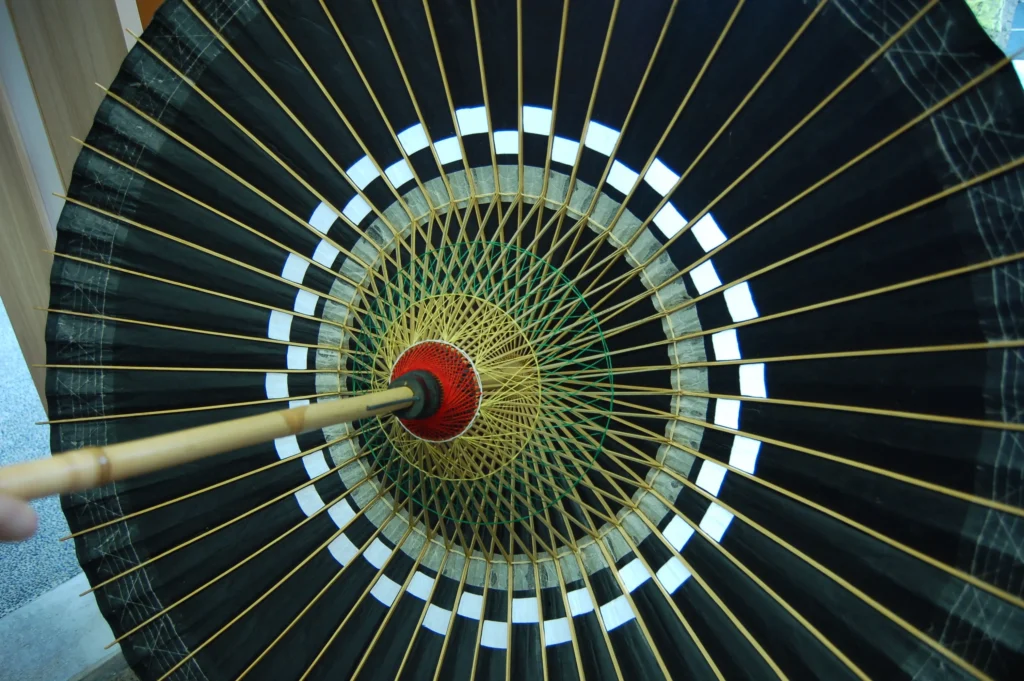
Generally speaking, a Kanazawa umbrella weighs between 20 to 22 ounces, which is a bit hefty for an umbrella, but you’ll still get a nice 44-inch span to take shelter under. Designs range from “unisex” bold and somber geometric patterns to exciting and vibrant “masculine” depictions of animals in motion to elaborate and tranquil “feminine” floral scenes. Common pattern layouts include concentric circles or the pairing of a crescent moon and full moon which creates an off-center arrangement.
Parasols, without the wax coating needed for rain, are available for custom order as well. Professionally applied Kanazawa gold leaf is popular for these.
Caring for a Japanese umbrella requires only slightly more consideration and effort than you’re used to giving a “Western” umbrella that you hope will last a long time. Firstly, remember to carry your Japanese umbrella by its top handle while it’s closed up. You’ll also need to prop it up the same way when you’re not using it. After time spent in the rain or snow, leave the umbrella half open for a few days to dry in a shady spot. Avoid using it in excessive wind. If you can manage those few things, your umbrella may just last you a couple of decades.
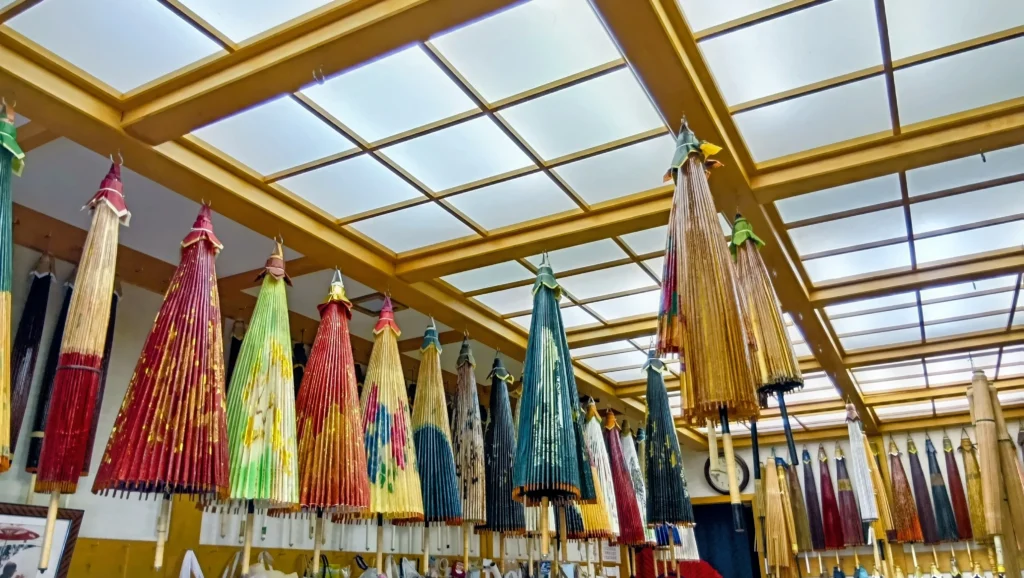
While the workshop and gallery offer umbrellas for sale, most customers prefer to place an order based on one of the works in stock. Customizable options include more than just the color and illustrations. You can request a wider or smaller umbrella. Plus, there are wide and slender options for the girth of the handle. The colors of the string used and the color of the paper that is wrapped around the top “cap” of the umbrella are also entirely up to you. If you want something simpler in design, children’s umbrellas are much smaller and made without the elaborate thread work characteristic of the adult versions.
Each of the Matsuda umbrellas are unique. Some are even the result of collaborations with local artists who work in pottery, kimono silk-dyeing, calligraphy, sumi-e painting, and even photography. My personal favorite was an autumn-themed umbrella with actual Japanese maple leaves sandwiched between sheets of translucent, white paper.
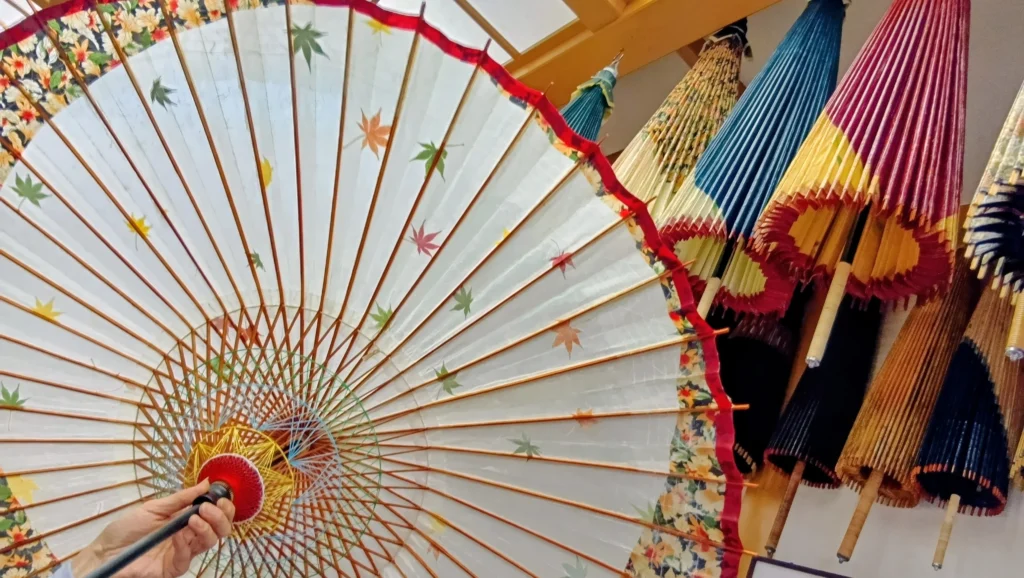
Over the past 130 years, the Matsuda family has provided gorgeous works of art to people from all walks of life, even celebrities. (Ask about the time Tommy Lee Jones popped in to buy an umbrella for his wife.)
Through hard times when umbrella-making was literally back-breaking work and good times during the revival of Japanese traditional craftsmanship, the Matsuda family has persevered. If you’re planning a visit, make sure to contact the store in advance as holidays are sometimes irregular. And besides, you’ll want to get the fullest experience possible during your visit.
About Keri Yazawa
Keri Yazawa, a resident of Kanazawa City since 2005, guides bicycle tours specializing in good food, quirky history, local craft making, and gorgeous landscapes.
Article photos and written content © 2025 Keri Yazawa. All rights reserved.