KANAZAWA
Tsurugi: Kanazawa’s Neighbor of Legends and Shrines
You’ve seen the Japanese countryside in photos – or perhaps films – and definitely in anime! Is it really that quiet, that peaceful, that green? Does it buzz with the humming of cicadas in the summertime? Are there really ancient temples and shrines to be found just around the street corner? Well, if you pay a visit to the small community of Tsurugi, just a 30-minute train ride beyond Kanazawa City, then you’ll find that the answer to all of those questions is yes!
A 1,000-year-old shrine on the mountain side…
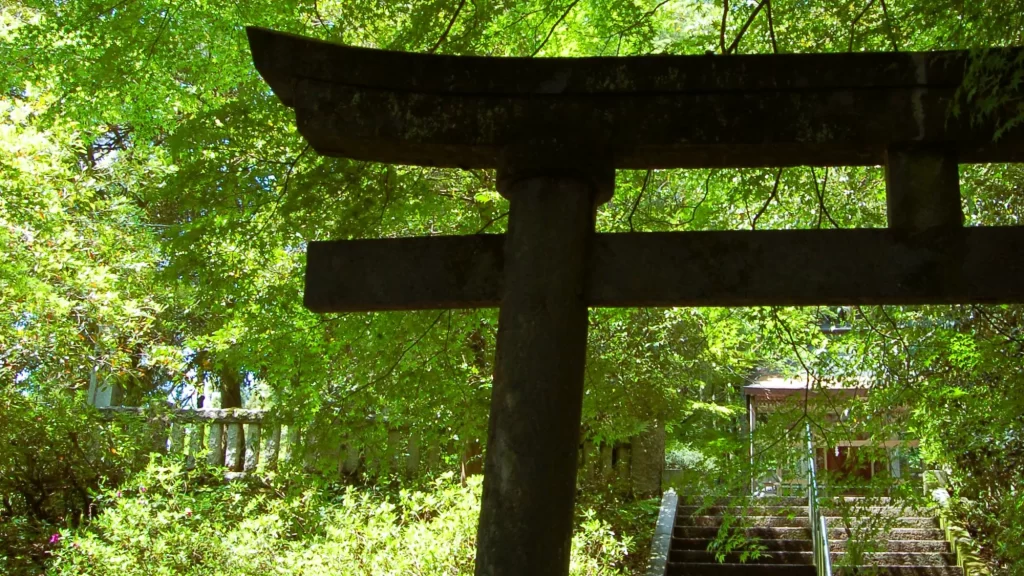
Tsurugi’s Kinkengu Shrine is a 15-minute walk from the train station and a favorite with folks who are hoping for a sudden financial windfall. The name of this Shinto shrine begins with the kanji character for “gold,” which has led a lot of people (including television travel documentaries) to assume that this is the place you go when you’re hoping to turn your monetary luck around.
Unfortunately, that’s a recent misconception.
Kinkengu dates back over 1,000 years, back to a time when it was rice and not coins that were used as currency. (Yes, if you wanted a blessing for your upcoming marriage or journey or harvest or whatnot, you’d offer rice to the priest in exchange.) The “gold” part of the shrine’s name actually refers to metal, harkening back to a time when the town’s name – Tsurugi – was written with the kanji character meaning “sword.”
But don’t worry! You can still pray for that winning lottery ticket.
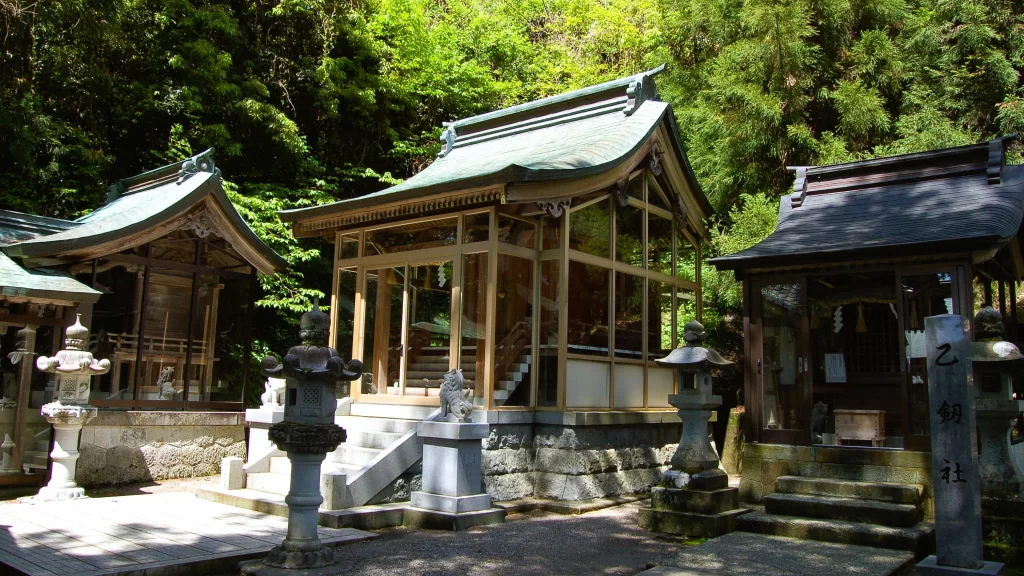
Of the many deities enshrined at Kinkengu, there’s one that every Japanese school child learns about: Sugawara no Michizane. Sugawara lived over 1,000 years ago. He was a renowned poet and enjoyed a privileged position within the Imperial Court in Kyoto. However, a jealous rival spread terrible rumors about Sugawara, claiming he secretly supported the crown prince’s brother. Sugawara was removed from his post, stripped of his title, and then sent to a distant, obscure government office. Basically, he and his family were exiled from civilization.
Sugawara died soon afterwards and that was when the real trouble started. Plagues and droughts besieged the land. The emperor’s sons died in quick succession. Lightning bolt after lightning bolt struck the Imperial Palace, a terrifying thing to witness in a country that relies on wooden architecture. Rainstorms then brought floods and it was decided that Sugawara’s vengeful spirit was responsible. His position and title were posthumously restored, but it wasn’t enough. Decades later, Sugawa was named Tenjin, the god of the sky and storms.
These days, his significance has little to do with the weather. His purview has reverted back to what he’d excelled at in life: literature and scholarship. So if there’s a big test coming up, it wouldn’t be a bad idea to stop by Kinkengu Shrine and ask Sugawara-sama for a little luck, would it?
Take a break by the waterfall…

If you’re ready for a coffee break, leave the shrine through the red gate and take the stairs down to the street underpass. Then, head down the rest of the steps, past Kinkengu Fudou Waterfall. (Say hello to the koi swimming in the pool there.)
After you bow yourself out of the final shrine gate, go down to the second block and you’ll find Cafe and Tokidoki Bar Takeda. The owner is a lovely lady who makes incredible banana bread, light and fluffy and topped with real whipped cream. The iced tea is also flavorful without being overpoweringly sweet.

And now that refreshments have been had, onward!
The Lion Dance, a proud local tradition!
There’s an interesting museum up the hill from Kinkengu Shrine. It’s a strenuous 30-minute walk, so I recommend getting there by bicycle. (Yes, bicycle rentals are available in town, both conventional bicycles and electric ones. I recommend the latter for this next adventure. Let the bicycle do the work for you – you’re on vacation, after all!) The museum we’re headed for is called Shishi World. It displays the carved wooden lion heads that are used for the Lion (or Shishi) Dance performed not only in Japan but in festivals around the world. (Hence the name Shishi World.)
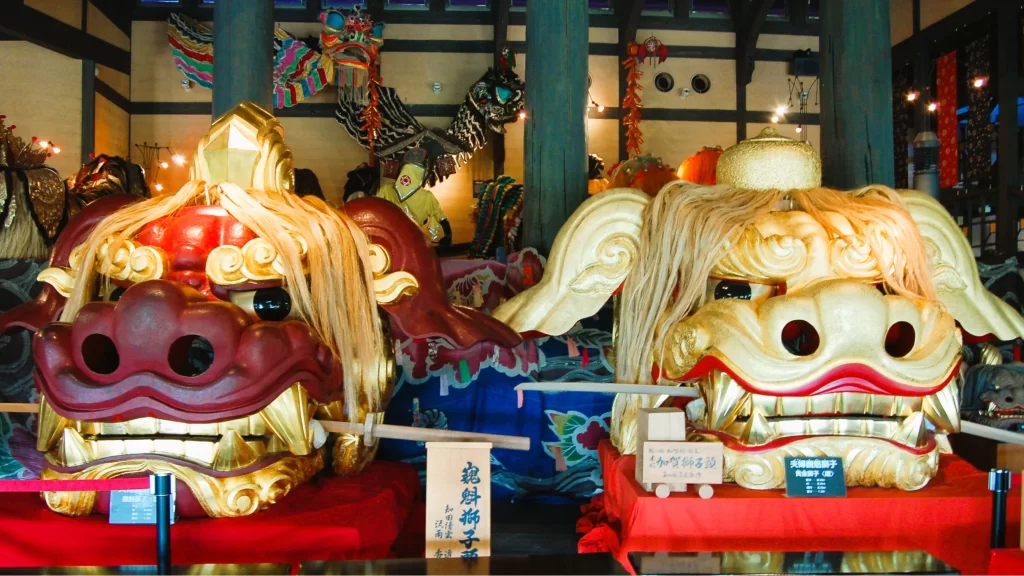
Before you head upstairs to the exhibition hall, check out the display beside the restrooms. Arranged in a line of progression on a long table, you can see how the lion heads are made, from wooden log to finished carving. But the real treat is on the next level up where two massive lion heads hold court.
The red one is male and the gold one is female and I’m not kidding when I say an adult of average height can stand in front of them and look them in the eye.
As you wander the exhibits, an audio tour plays from the museum’s sound system, explaining (in Japanese) why the woodcarvers of Tsurugi are so into shishi. Back in the 1400s, the local people here broke the rule that forbade anyone apart from samurai from training for combat. Their blithe disregard for the law ended about 100 years later when the shogun put a stop to it. But the people here were isolated… and stubborn, so they switched gears from training with weapons to training to perform the Shishi Dance. To the skeptical shogun, they claimed they were merely upholding tradition, but in reality they were keeping themselves battle ready. Just in case.
It takes a special kind of bravery to train illegally right in the shogun’s backyard. Perhaps it’s this same bravery that compels paragliders to launch themselves from the top of the mountain behind the Shishi World Museum. One at a time, just as the temperature approaches the day’s high and the wind gusts up the slope, they take off until as many as a dozen of them are up in the air. The best place to watch is, of course, as high up as you can get, so catch a gondola up to Sky Shishiku and settle in for a mesmerizing show. (Just don’t forget to bring a hat and sunscreen.)

I could sit for hours and watch the paragliders drift around and around on the wind, so it’s hunger that usually drives me back down the mountain. (The roundtrip gondola ticket is a steal.)
With its scenic views, powerful traditions, and deep history, Tsurugi really is one of the best places to experience the quintessential Japanese countryside.
About Keri Yazawa
Keri Yazawa, a resident of Kanazawa City since 2005, guides bicycle tours specializing in good food, quirky history, local craft making, and gorgeous landscapes.
Article photos and written content © 2025 Keri Yazawa. All rights reserved.