SPRING
Cycling Biwaichi: Tips for Riding Around Japan’s Largest Lake and Castles
©Keri Yazawa
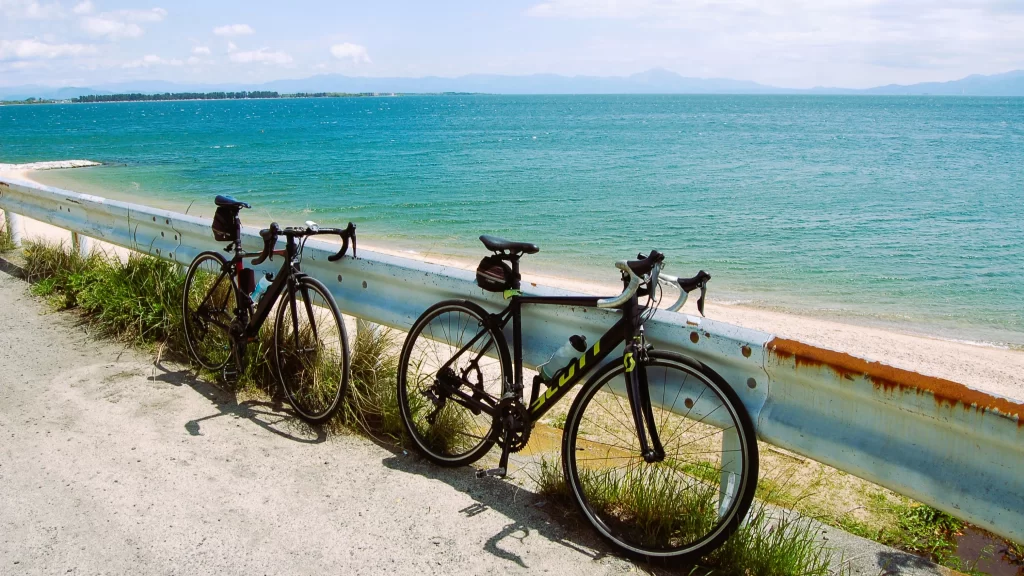
Cycling Lake Biwa, Japan’s largest lake just north of Kyoto, is one of Japan’s most popular routes. (Perhaps second only to the Shimanami Kaido that runs across the Seto Inland Sea between Hiroshima and Ehime Prefectures.) Now, I like cycling and I especially like waterfront cycling, so this place quickly zoomed up near the top of my Cycling Bucket List.
I’m an experienced cyclist in Japan and I’m familiar with the road rules (stay to the left!), manners (use hand signals when turning), and conditions (uncovered street gutters – yikes!). Still, despite all the research I did, I discovered some unpleasant surprises that I’ll share with you here. Hopefully, my experiences will help you better plan (and enjoy) your trip.
In fair weather, Lake Biwa is gorgeous and well worth the time and effort to ride it. Unfortunately, doing an entire circuit around the lake is a bit much for most casual cyclists. Lake Biwa’s cycling route (called Biwaichi) is 130 miles long. If you elect to cross the Biwako Bridge near the lake’s southern tip, you’ll only be shaving 37 miles off of the total distance; ninety-three miles is still a very long ride. That’s why most people give themselves two or three days to finish one circuit, staying at hotels or in campgrounds along the way. The disadvantage to this plan is – in a word – weather. You may end up spending a miserable rainy day on the road just to make it to your overnight stop.
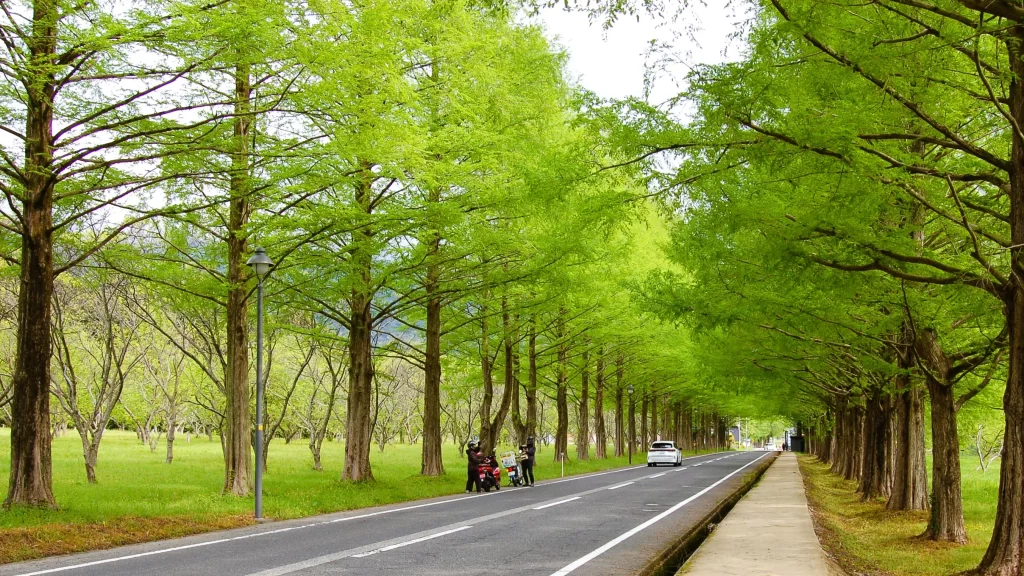
Rather than worry about reaching my next hotel or inn on time, I decided to stay in one place for three nights, riding out and returning each day. With this in mind, I studied the route and selected the community of Makino, a 2-hour drive from my starting point in Kanazawa City. Makino is located in Takashima City along the western shore of the lake. It’s known for its Metasequoia Avenue, which is gorgeous all year round.
Makino Station: https://maps.app.goo.gl/sb2yMwxKXgNsiE8TA
Metasequoia Avenue: https://maps.app.goo.gl/GXZ7uacbPRky2gr6A
©Keri Yazawa
Can you imagine these leaves in the fall? Stunning.
Makino has some cafes and restaurants (including an Indian place called RAJU that I could happily eat at every day for the rest of my life), but accommodation in Makino is pretty rustic. Also, the shops are not very well stocked. Unless you’ve experienced Japanese country living before, you’ll probably want to consider spending the night in central Takashima City near Omi-Takashima JR Station, Adogawa JR Station, or Shin-Asahi JR Station, where you’ll have more restaurant options and recognizable supermarkets.
RAJU: https://maps.app.goo.gl/gff3zN5ND2c5qtoo7
Omi-Takashima JR Station: https://maps.app.goo.gl/LQrVgpkVKE55BiBb9
Adogawa JR Station: https://maps.app.goo.gl/hdF9Wc3sRSxZKHj46
Shin-Asahi JR Station: https://maps.app.goo.gl/3VNVLv4fRpi8AbXh8
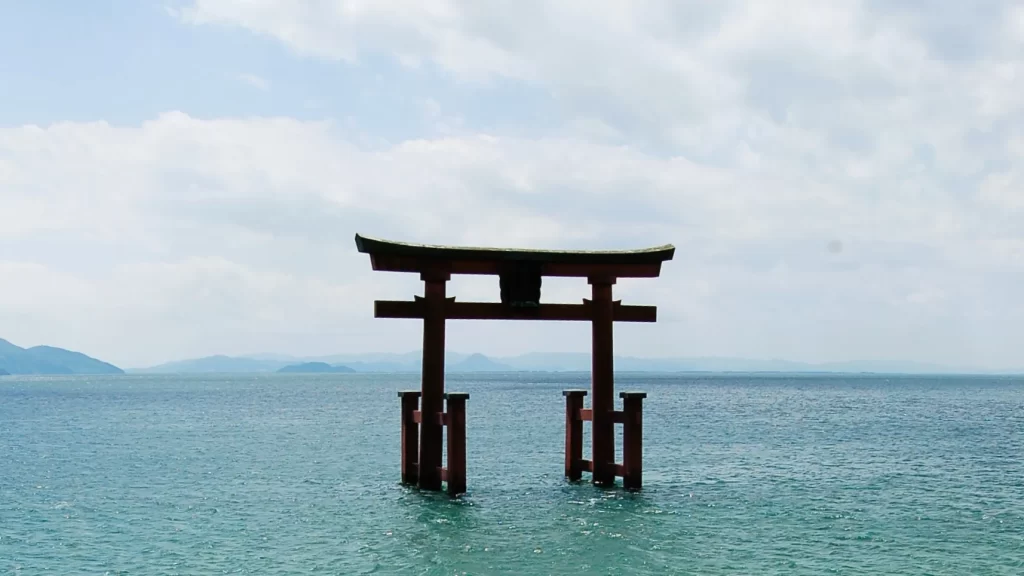
The pride of Takashima City is Shirahige Shrine, famous for its gate (or, torii in Japanese) which stands not on dry land but out in the waves of Lake Biwa.
Shirahige Shrine: https://maps.app.goo.gl/LPY2zJGdJ9Er2wgQ6
©Keri Yazawa
It’s the photo spot of photo spots on the western side of Lake Biwa, so of course I had to see it for myself. I chose to go on a holiday, which meant holiday traffic. The road is only two lanes wide (one lane each way) and cyclists must ride on the shoulder. What’s more, there is no place to safely cross if you decide to visit the shrine, which is opposite the gate. There are no back roads or alternate routes around Shirahige Shrine, so you are at the mercy of harried drivers who have to deal with holiday traffic congestion and construction. If you must see Shirahige’s beautiful, watery gate for yourself (especially on a weekend or national holiday), hire a local bicycle tour guide to worry about the stressful things for you.
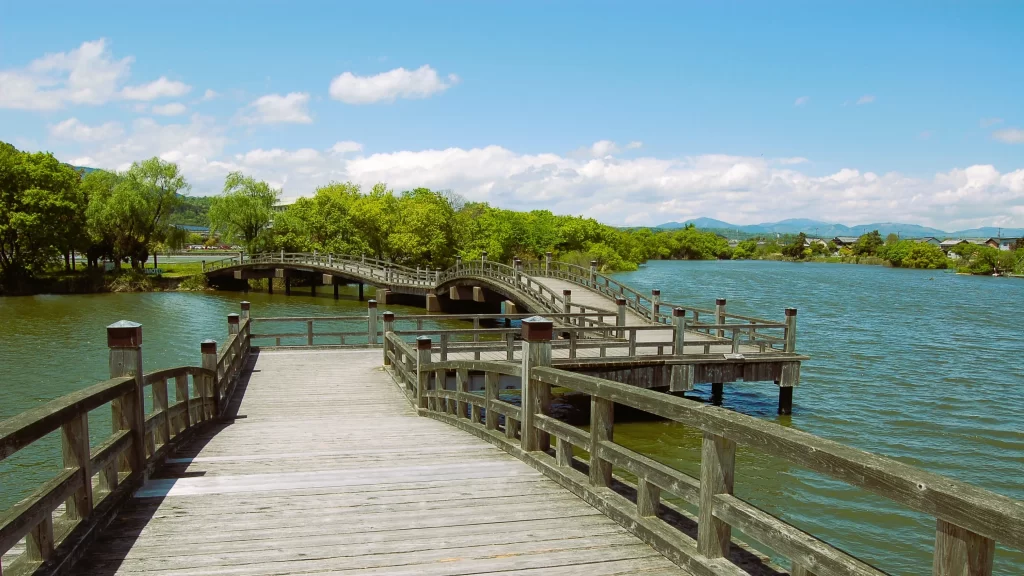
Not far from Shirahige Shrine is a tranquil fishing spot called Otomega Pond. I stumbled upon this quiet oasis entirely by accident and had a really calming stroll (which I desperately needed after struggling in the traffic near the shrine) across this recently trending bridge.
Otomega Pond: https://maps.app.goo.gl/xGfhEmxk2Ta7jyoD8
©Keri Yazawa
Featured as the setting for a pivotal, confessions-of-the-heart scene in a recent television drama, many couples now come here for a romantic afternoon.
The ride between Makino and Otomega Pond was relatively relaxing. Even on a holiday, the roads were not busy. However, I realized that the blue cycling lines that indicate a cycling route in Japan were only painted in the lakeside lane and sometimes the paint was so worn that it was difficult to see.
Keeping this in mind, I elected to leave as early as possible the next day and ride around the north end of Lake Biwa. This meant that I would be using the marked cycling lane on the return trip in the afternoon. The north end of Lake Biwa is a beautiful ride, but you’ll need to know a couple of things in order to stay safe.
First, this stretch of the Biwaichi Cycling Route has cyclists riding on winding country roads with local traffic (usually fishermen in the early hours of the morning). At times, the road is too narrow to allow for a centerline. Also, people will be hauling jet skis behind their vehicles. If one such car passes you, slow down to increase the distance between you and the trailer or else you’ll risk being cut off.
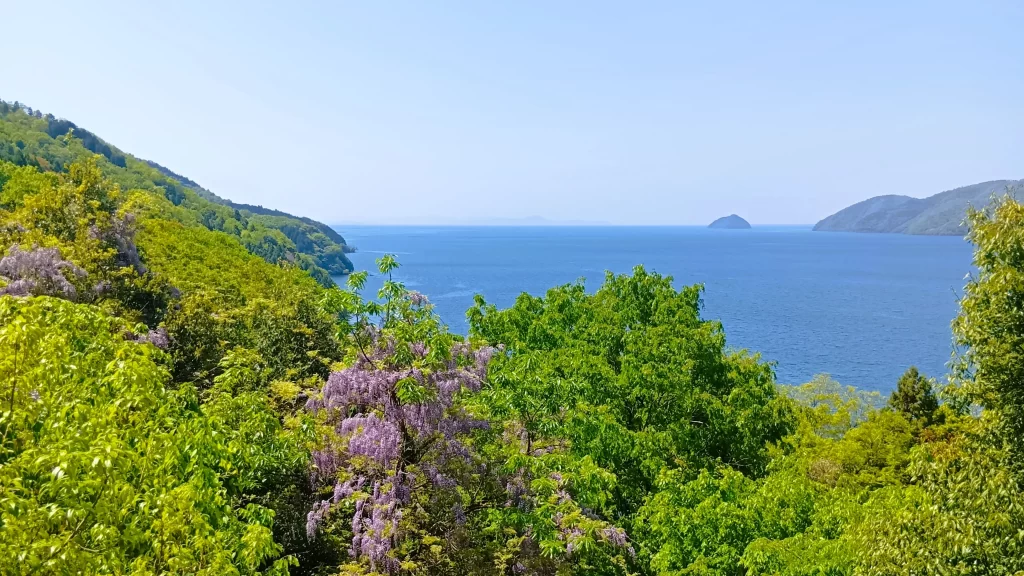
The second thing you need to know about riding the north end of the lake is that the route will take you inland and through two mountain passes. The grade is around 7% and the slopes vary in length from about half a mile to a mile in length. The view from the top is spectacular.
©Keri Yazawa
There is a bench but no water taps or vending machines, so make sure you have all the refreshments you might need on hand, especially if you are (insanely) riding in the summer!
If you are a regular hillclimber, you won’t have any trouble with this portion of the Biwaichi. You will have to be careful when you come down the second hill into the hamlet of Kinomoto, however, as the route takes a number of sudden turns, which may muddle your sense of direction. If you follow the blue line and stick to the quieter roads, then there is one major thoroughfare you’ll have to cross without the aid of a traffic light. (Pray for sympathetic drivers.)
Kinomoto: https://maps.app.goo.gl/gLMWgt5A645iJXWs6
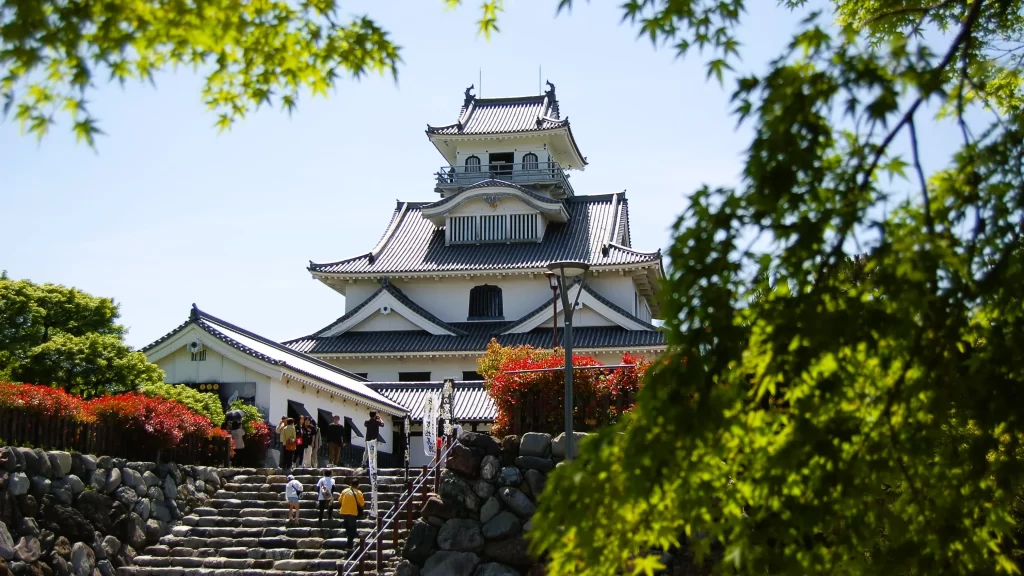
From Roadside Station Kohoku Mizutori, cyclists get their own lane and it’s an easy breezy, long, flat ride south 8 miles to Nagahama. Nagahama is a small city with a healthy budget for tourism. It’s a great place to stop for lunch and a little sightseeing. I really enjoyed Nagahama Castle and history buffs will find the exhibits interesting. Unfortunately, most of the information is only available in Japanese, so arranging for a guide to meet you would be advisable.
Roadside Station Kohoku Mizutori: https://maps.app.goo.gl/TKxgJ24bRKwC1Sy86
Nagahama Castle: https://maps.app.goo.gl/ss1T51irpP5JJjMZ6
©Keri Yazawa
Yes, that is a balcony you’re seeing up on the top floor and the view alone is enough to make you recover your strength for the ride back. But give yourself a few hours to hit a restaurant and explore the town.
If you’re coming to Lake Biwa from Kyoto, you may want to consider staying in Hikone (another stunning castle town) and renting bicycles for cycling north 8 miles to Nagahama. You won’t have to worry about car traffic or steep hills on the cycling route and, best of all, you’ll be free of the crowds while still getting spectacular views.
Hikone: https://maps.app.goo.gl/tZggPY3e9LPetz9dA
Whatever route you choose, be aware that the lakeside lane will be the side of the street with the best support for cyclists. Drivers in Japan are required to yield to cyclists (and cyclists must yield to pedestrians) and, most of the time, Japanese drivers are very aware of cyclists on the road. However, Lake Biwa is an increasingly popular destination for visitors from all over the world, including countries where drivers are less bicycle-aware. When in doubt, arrange for a guide.
About Keri Yazawa
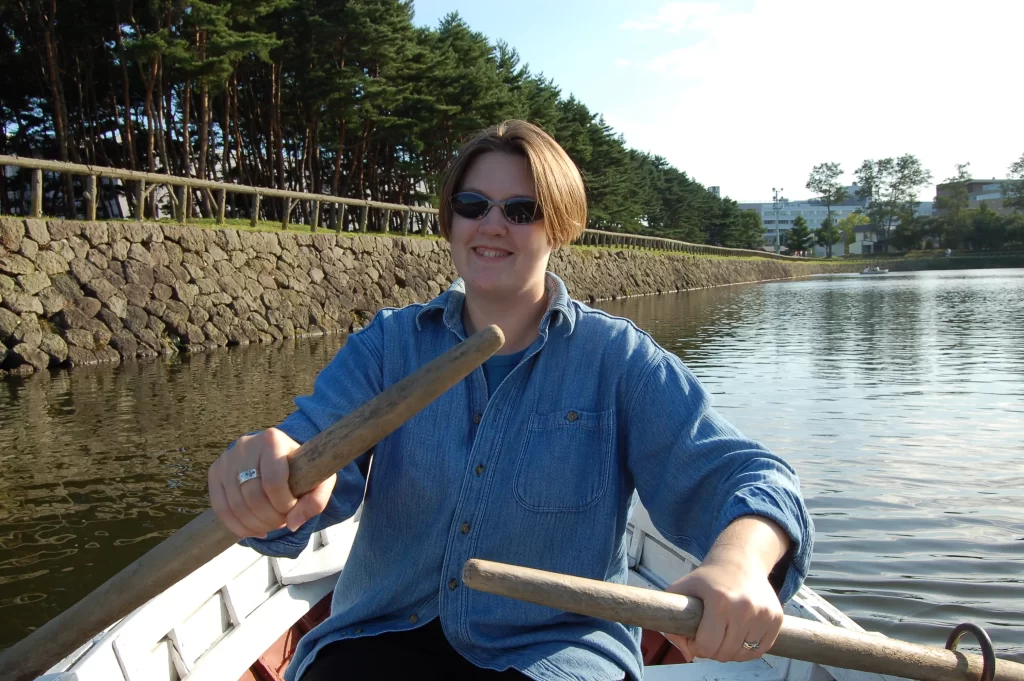
Keri Yazawa, a resident of Kanazawa City since 2005, guides bicycle tours specializing in good food, quirky history, local craft making, and gorgeous landscapes.
©Keri Yazawa